
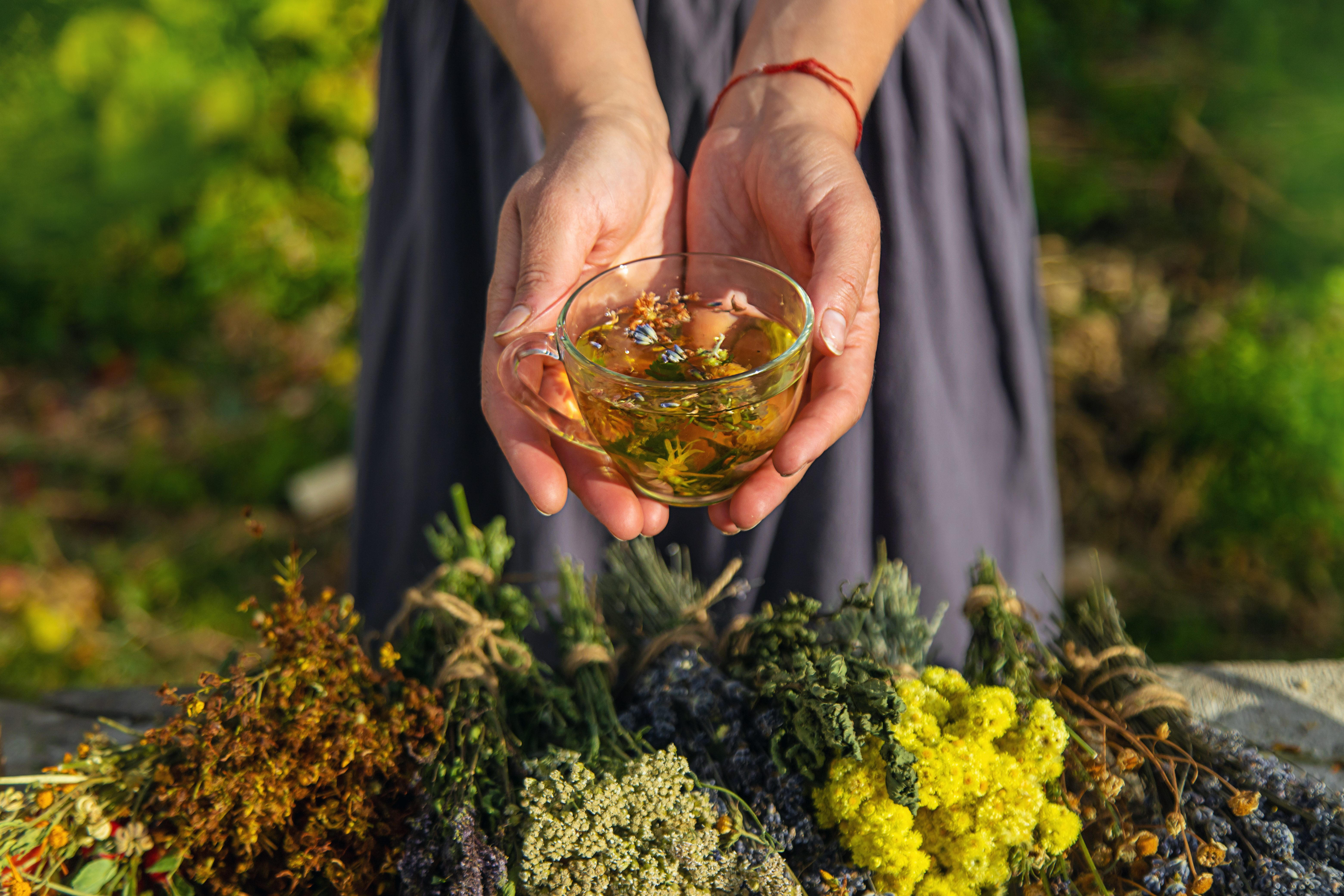
Dashamoola, meaning “ten roots,” is a traditional Ayurvedic formulation comprising ten medicinal plants that have historically been used to support women’s health and manage conditions collectively described as Stri Roga.1
Its applications extend across menstrual health, reproductive wellness, pregnancy-related care, postpartum recovery, and menopausal symptoms. The formulation contains phytochemicals that have been investigated for their anti-inflammatory, analgesic, antioxidant, and immunomodulatory properties.
Composition and phytochemical constituents
Dashamoola consists of two groups: Brihat Panchamoola, comprising five large trees, and Laghu Panchamoola, comprising five smaller plants.
|
Group |
Botanical name |
Traditionally described properties |
|
Brihat Panchamoola |
|
|
|
Bilva |
Aegle marmelos |
Antioxidant and anti-inflammatory activity |
|
Agnimantha |
Premna integrifolia |
Anti-inflammatory and potential tissue-repairing effects |
|
Shyonaka |
Oroxylum indicum |
Antimicrobial, analgesic, and anti-inflammatory activity |
|
Patala |
Stereospermum suaveolens |
Traditionally used for general and reproductive health |
|
Gambhari |
Gmelina arborea |
Investigated for anti-inflammatory and tissue-supportive effects |
|
Laghu Panchamoola |
|
|
|
Brihati |
Solanum indicum |
Anti-inflammatory activity |
|
Kantakari |
Solanum xanthocarpum |
Anti-inflammatory and other pharmacological effects |
|
Gokshura |
Tribulus terrestris |
Diuretic activity and traditional use in reproductive wellness |
|
Shalaparni |
Desmodium gangeticum |
Immunomodulatory and anti-inflammatory potential |
|
Prishnaparni |
Uraria picta |
Investigated for tissue-supportive and neuroprotective effects |
Phytochemical investigations have identified alkaloids, flavonoids, saponins, tannins, terpenoids, and phenolic compounds across the constituent plants. These compounds have been associated with analgesic, antioxidant, antimicrobial, and anti-inflammatory activities. Nevertheless, their concentrations may vary according to plant identity, growing conditions, extraction methods, and formulation, and the contribution of individual compounds to clinical outcomes remains incompletely established.
Potential therapeutic applications in Stri Roga
- Menstrual disorders: Analgesic and antispasmodic effects have been proposed as possible mechanisms through which Dashamoola may alleviate dysmenorrhoea and menstrual cramps. Its anti-inflammatory properties have also been investigated in relation to pelvic discomfort. Traditional use extends to irregular menstruation, heavy menstrual bleeding, and premenstrual symptoms; however, reliable clinical evidence establishing efficacy for these indications remains insufficient.
- Reproductive health and infertility: Dashamoola is traditionally described as a uterine tonic and has been used to support reproductive wellness. Potential effects on inflammation and physiological stress have prompted interest in its application to conditions such as polycystic ovary syndrome (PCOS) and endometriosis. However, claims involving hormonal regulation, improved ovarian function, or enhanced fertility require confirmation through well-designed human studies. It should not replace established investigations or evidence-based treatment for infertility.
- Pregnancy and postpartum care: In Ayurvedic practice, Dashamoola-based preparations have been used during the perinatal period, particularly to support postpartum recovery, alleviate musculoskeletal discomfort, and promote general well-being. Anti-inflammatory and analgesic effects have been proposed as potential contributors to these applications. Claims regarding improved labour, increased lactation, or prevention of postpartum depression have not been adequately established. Use during pregnancy requires particular caution because safety data are limited and uterine effects have been proposed.
- Menopausal symptoms: Antioxidant and neuroprotective activities attributed to constituents of Dashamoola have prompted investigation into their potential relevance to mood, cognitive function, and age-associated changes. Nevertheless, evidence that the formulation regulates oestrogen levels, reduces hot flushes, or prevents osteoporosis remains inadequate. It should not be considered an established alternative to evidence-based menopause management.
- Inflammation and pain: Experimental studies have investigated the anti-inflammatory and analgesic properties of Dashamoola and its constituent plants. These findings provide a rationale for further research into pelvic pain and musculoskeletal discomfort. However, its effectiveness in treating pelvic inflammatory disease (PID) or other infections has not been established; suspected reproductive tract infections require prompt medical assessment and appropriate antimicrobial treatment.
Common formulations and clinical use
|
Formulation |
Traditional application |
|
Dashmoolarishta |
Used in Ayurvedic practice for postpartum care and selected menstrual complaints |
|
Dashamoola Churna |
Powdered preparation traditionally used for pain and inflammatory complaints |
|
Dashamoola Kwath |
Decoction used for menstrual discomfort and other inflammatory conditions |
|
Dashamoola oil |
Applied during Abhyanga (therapeutic massage) for musculoskeletal discomfort |
Dosage and administration depend on the preparation, its ingredients, and individual circumstances. No universally established, evidence-based dosage has been demonstrated for specific gynaecological conditions. Although pharmacological studies and preliminary clinical investigations have explored Dashamoola-based preparations, larger, well-controlled trials are needed to determine their effectiveness, appropriate dosing, and long-term safety.
Safety considerations and research priorities
Gastrointestinal disturbances, including nausea and diarrhoea, may occur with inappropriate use. Potential interactions with medicines and variability in herbal preparations also warrant consideration. Particular caution is necessary during pregnancy because reproductive safety has not been adequately established. Individuals with kidney disorders or those taking regular medication should seek professional advice before use. Treatment should be supervised by a qualified healthcare professional familiar with the preparation and the patient's clinical circumstances.
Future research should prioritise standardised formulations, pharmacokinetic studies, systematic safety assessments, and adequately powered clinical trials. Studies should evaluate defined outcomes, including menstrual pain, bleeding patterns, reproductive function, postpartum recovery, and menopausal symptoms, rather than relying solely on traditional indications or laboratory findings.
Conclusion
Dashamoola remains an important formulation in Ayurvedic approaches to Stri Roga, with traditional applications spanning menstrual health, reproductive wellness, postpartum recovery, and menopause. Its constituent plants contain bioactive compounds with potentially beneficial anti-inflammatory, analgesic, antioxidant, and immunomodulatory properties. However, evidence supporting its effectiveness for specific gynaecological conditions is limited, and claims concerning hormonal regulation, fertility enhancement, lactation, and menopause management require further validation.
References:
- Suman P, Sharma R, Kumari S, et al. Dashmoola in Stri Roga: a review on its therapeutic benefits. J Ayu Int Med Sci. 2025;10(4):259-266. https://jaims.in/jaims/article/download/4613/7167?inline=1
- Parekar RR, Bolegave SS, Marathe PA, et al. Experimental evaluation of analgesic, anti-inflammatory and anti-platelet potential of Dashamoola. J Ayurveda Integr Med. 2015;6(1):11-18. doi:10.4103/0975-9476.146565 https://pmc.ncbi.nlm.nih.gov/articles/PMC4395922/