
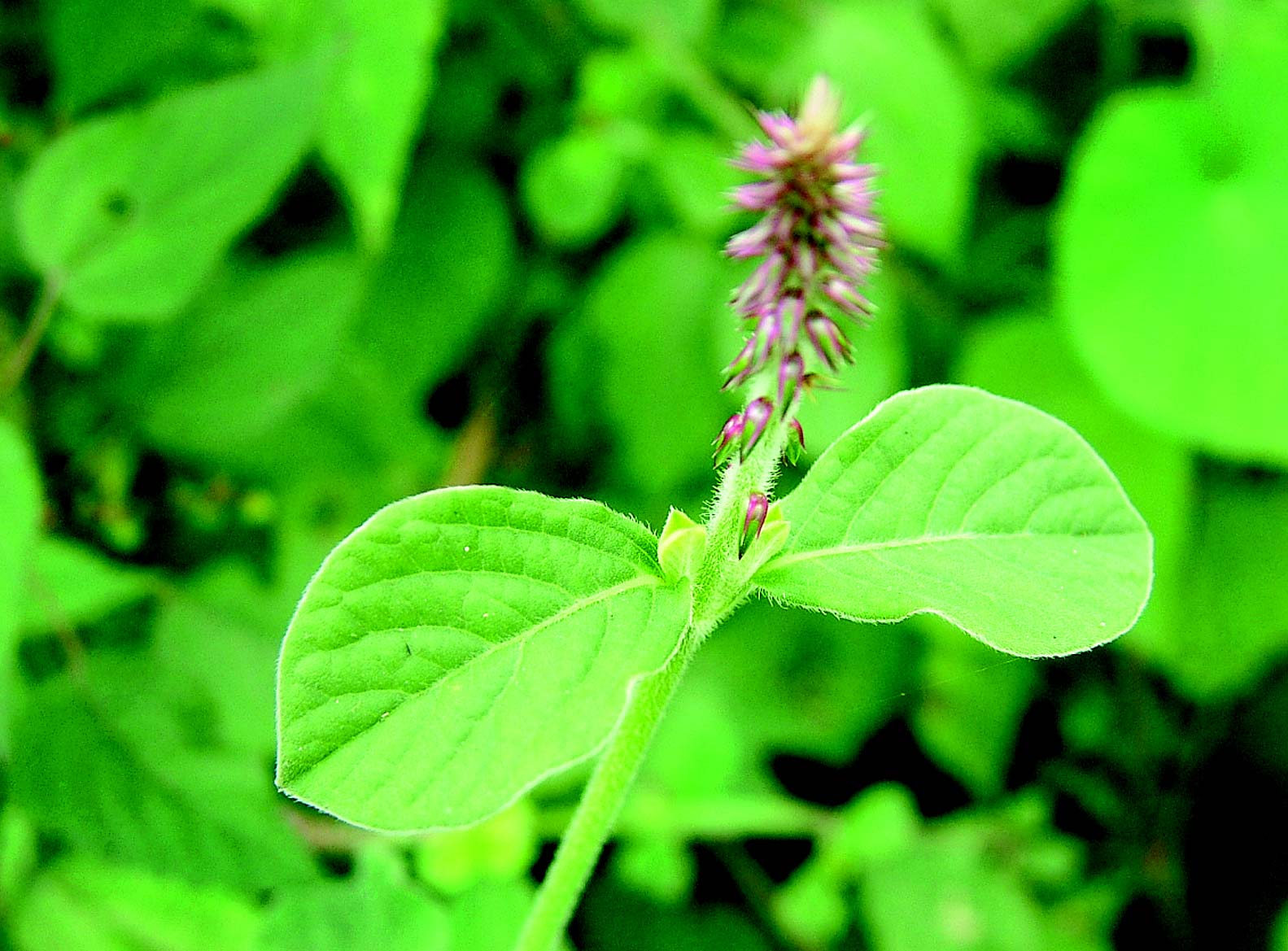
Introduction
Achyranthes aspera Linn., commonly known as Apamarga, is an important medicinal plant described in Ayurvedic literature for its therapeutic applications in various surgical and para-surgical procedures. Belonging to the family Amaranthaceae, Apamarga is renowned for its Kshara (alkaline) preparation, which is extensively used in Ksharasutra therapy for the management of ano-rectal disorders such as fistula-in-ano (Bhagandara), hemorrhoids (Arsha), and pilonidal sinus. The alkaline extract obtained from the ash of Achyranthes aspera possesses potent chemical debridement, antimicrobial, anti-inflammatory, and wound-healing properties. These characteristics make it a valuable therapeutic agent for the removal of unhealthy tissue and promotion of healing in chronic ano-rectal diseases. Recent pharmacological studies have also highlighted the plant’s antimicrobial and tissue-regenerative potential, supporting its traditional use in Ayurvedic surgery.
Therapeutic role of Achyranthes aspera in ano-rectal disorders
Chemical debridement action:
The most significant therapeutic application of Achyranthes aspera is through Apamarga Kshara, a highly alkaline preparation used in Ksharasutra therapy. The alkaline constituents facilitate controlled chemical cauterization and debridement of diseased tissue. This process helps remove necrotic tissue, unhealthy granulation tissue, and epithelial lining of fistulous tracts without extensive surgical excision. Controlled tissue destruction promotes effective drainage and prevents accumulation of infectious material.
Excision and tract obliteration:
According to Ayurvedic principles, Apamarga Kshara possesses Chhedana (excision), Bhedana (incision), and Lekhana (scraping) properties. These actions contribute to gradual cutting through the fistulous tract while simultaneously inducing fibrosis and healing. The continuous debridement effect ensures complete destruction of the pathological tract, thereby reducing the likelihood of recurrence.
Antimicrobial activity:
Phytochemical investigations have demonstrated that Achyranthes aspera contains alkaloids, flavonoids, saponins, and phenolic compounds with antimicrobial activity against various bacterial and fungal pathogens. The alkaline environment created by Apamarga Kshara inhibits microbial growth within the diseased tract and helps maintain local asepsis during treatment. This antimicrobial action is particularly beneficial in chronic fistulas and infected sinus tracts.
Anti-inflammatory properties:
Inflammation plays a crucial role in the persistence of ano-rectal disorders. Experimental studies have reported significant anti-inflammatory activity of Achyranthes aspera extracts through modulation of inflammatory mediators. Reduction in local inflammation contributes to decreased pain, edema, and tissue irritation, thereby improving patient comfort during treatment.
Promotion of wound healing:
Apamarga Kshara facilitates wound healing by stimulating healthy granulation tissue formation and tissue remodeling. Following chemical debridement, the wound heals through fibrosis and epithelialization. This unique mechanism allows simultaneous cutting and healing, which is a hallmark of Ksharasutra therapy. The result is effective tract closure with minimal scarring and preservation of surrounding structures.
Clinical applications in ano-rectal disorders
Fistula-in-ano (Bhagandara):
Apamarga Kshara is most commonly used in Ksharasutra therapy for fistula-in-ano. The medicated thread gradually cuts through the tract while promoting drainage and healing. Clinical studies have reported favorable healing rates, low recurrence, and preservation of anal sphincter function.2
Hemorrhoids (Arsha):
In Kshara Karma and Ksharasutra ligation procedures, Apamarga Kshara induces coagulation and necrosis of hemorrhoidal tissue, resulting in shrinkage and eventual sloughing of the pile mass.3
Pilonidal sinus:
Chemical debridement by Apamarga Kshara helps eradicate infected sinus tracts, remove debris, and promote healthy wound healing, reducing the need for extensive surgery.
Conclusion
Achyranthes aspera (Apamarga) is a highly valuable Ayurvedic medicinal plant with significant applications in ano-rectal surgery. Its alkaline preparation, Apamarga Kshara, serves as an effective chemical debriding agent that facilitates removal of diseased tissue, microbial control, inflammation reduction, and wound healing. Through its unique ability to promote simultaneous excision and tissue repair, it has become a cornerstone of Ksharasutra therapy for fistula-in-ano and other ano-rectal disorders. Contemporary scientific evidence supports its traditional use, highlighting its potential as a safe, cost-effective, and minimally invasive therapeutic option in colorectal and Ayurvedic surgical practice.
Recent NCBI References
- Talreja, Shreya & Tiwari, Dr. (2023). A Comprehensive Review of Achyranthes Aspera: Ethnopharmacology, Phytochemistry, and Therapeutic Potential. AYUSHDHARA. 270-278. 10.47070/ayushdhara.v10i5.1368. https://www.researchgate.net/publication/375715439
- Panigrahi HK, Rani R, Padhi MM, Lavekar GS. Clinical Evaluation of Kshara sutra Therapy in the management of Bhagandara( Fistula- in-Ano)- A prospective study. Anc Sci Life. 2009;28(3):29-35. https://pmc.ncbi.nlm.nih.gov/articles/PMC3336315/
- Dudhamal TS, Gupta SK, Bhuyan C, Singh K. The role of Apamarga Kshara in the treatment of Arsha. Ayu. 2010;31(2):232-235. doi:10.4103/0974-8520.72406 https://pmc.ncbi.nlm.nih.gov/articles/PMC3215370/