
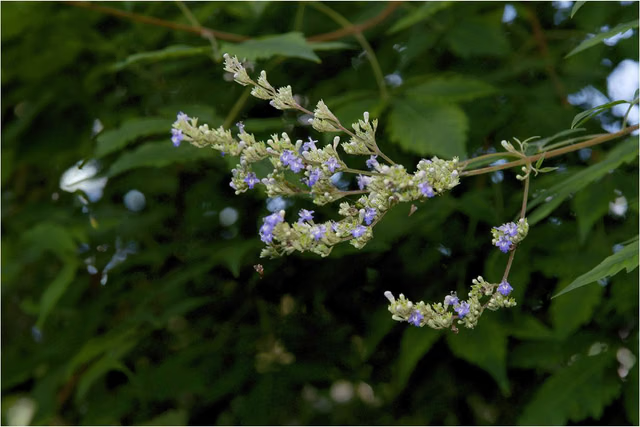
Introduction
Musculoskeletal pain is commonly associated with disorders such as osteoarthritis, cervical spondylosis, lumbar spondylosis, sciatica, frozen shoulder, and tendinopathies. These conditions often involve chronic inflammation, degeneration, muscle spasm, and impaired joint function. Ayurveda attributes such disorders primarily to the aggravation of Vata Dosha, often accompanied by Kapha involvement.
Agnikarma, described by Sushruta, employs controlled thermal cauterization to alleviate pain and stiffness. Nirgundi serves as an important adjunct therapy because of its ability to control inflammation and support musculoskeletal health.1 The combined use of Agnikarma and Nirgundi offers a holistic strategy addressing both symptomatic relief and underlying pathology.
Pharmacological profile of nirgundi
The therapeutic efficacy of Nirgundi is attributed to bioactive compounds such as flavonoids, iridoid glycosides, casticin, negundoside, luteolin, and essential oils. These constituents exhibit multiple biological activities relevant to musculoskeletal disorders.2
Experimental studies have shown that Nirgundi inhibits inflammatory mediators including prostaglandins, cyclooxygenase (COX), and lipoxygenase pathways. The herb also demonstrates antioxidant activity by reducing oxidative stress associated with chronic inflammation and tissue degeneration. Additionally, Nirgundi possesses mild muscle-relaxant and neuroprotective properties that contribute to pain reduction.
Role in agnikarma-assisted pain management
Agnikarma provides rapid pain relief through thermal analgesia, improved local circulation, and neuromodulation. Following the procedure, Nirgundi can support recovery through several mechanisms.
Its anti-inflammatory activity helps reduce local swelling and tenderness around affected joints, muscles, and tendons. By suppressing inflammatory cytokines and oxidative stress, Nirgundi facilitates progression from inflammation to tissue repair. Improved circulation induced by Agnikarma may further enhance local delivery of the herb's bioactive constituents.3
Nirgundi also contributes to muscle relaxation and reduction of stiffness, thereby improving range of motion and functional capacity. Topical application of Nirgundi oil or leaf preparations is traditionally used to alleviate pain in arthritis, cervical spondylosis, low back pain, and sports-related injuries.
Clinical applications
The combination of Agnikarma and Nirgundi is commonly employed in the management of:
- Osteoarthritis of the knee
- Cervical and lumbar spondylosis
- Sciatica
- Frozen shoulder
- Tennis elbow
- Plantar fasciitis
- Chronic low back pain
Clinical observations suggest that patients receiving both therapies experience significant reductions in pain, stiffness, tenderness, and functional disability. The combination may also reduce dependence on long-term analgesic medications.
Conclusion
Nirgundi (Vitex negundo) is a valuable Ayurvedic medicinal plant with proven analgesic and anti-inflammatory properties. When integrated with Agnikarma therapy, it offers a synergistic approach to musculoskeletal pain management by combining thermal analgesia with botanical anti-inflammatory support. This combination addresses pain, inflammation, muscle stiffness, and tissue recovery, making it particularly useful in chronic musculoskeletal disorders. Further controlled clinical studies are needed to establish standardized treatment protocols and strengthen the evidence base for this integrative Ayurvedic approach.
Reference:
- Sharma, Kriti & Akansha, Akansha & Chauhan, E. (2023). PHARMACOLOGICAL AND THERAPEUTIC POTENTIAL OF VITEX NEGUNDO (NIRGUNDI): A REVIEW. https://www.researchgate.net/publication/372477631
- Dharmasiri MG, Jayakody JR, Galhena G, Liyanage SS, Ratnasooriya WD. Anti-inflammatory and analgesic activities of mature fresh leaves of Vitex negundo. J Ethnopharmacol. 2003 Aug;87(2-3):199-206. doi: 10.1016/s0378-8741(03)00159-4. PMID: 12860308. https://pubmed.ncbi.nlm.nih.gov/12860308/
- Samota B, Sharma S, Singh M, Sharma R, Garg P. Role of Agnikarma along with Ayurveda medication in management of trigger thumb - A Case Report. J Ayurveda Integr Med. 2026;17(2):101339. doi:10.1016/j.jaim.2026.101339 https://pmc.ncbi.nlm.nih.gov/articles/PMC12996233/