
Introduction
Acne vulgaris is a chronic inflammatory disorder of the pilosebaceous unit characterized by comedones, papules, pustules, nodules, and, in severe cases, scarring. It affects approximately 85% of adolescents and a significant proportion of adults, resulting in substantial psychosocial and cosmetic concerns. The pathogenesis of acne involves four major factors: increased sebum production, follicular hyperkeratinization, colonization by Cutibacterium acnes (formerly Propionibacterium acnes), and inflammation.
Although conventional treatments such as topical retinoids, benzoyl peroxide, antibiotics, and isotretinoin are effective, long-term use may be associated with adverse effects, irritation, antimicrobial resistance, and poor adherence. Consequently, interest has grown in plant-based therapeutics with multitarget pharmacological activities.
Barbados Aloe (Aloe vera Linn.), a succulent plant belonging to the Asphodelaceae family, has been extensively investigated for its antimicrobial, anti-inflammatory, antioxidant, wound-healing, and skin-regenerative properties. These biological activities support its potential role as a complementary therapeutic agent in acne management.
Botanical profile and phytochemical composition
Botanical description:
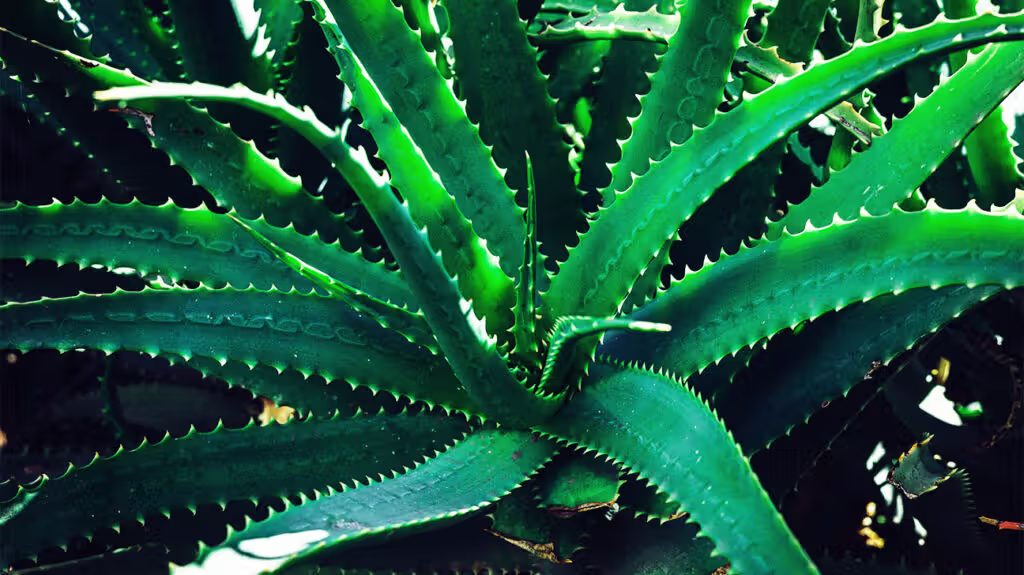
Aloe vera is a perennial succulent widely cultivated in tropical and subtropical regions. The mucilaginous gel obtained from the inner leaf parenchyma constitutes the principal medicinal component.
Major phytoconstituents:
Aloe vera contains numerous biologically active compounds, including:
- Acemannan
- Aloin
- Aloe-emodin
- Anthraquinones
- Polysaccharides
- Flavonoids
- Saponins
- Sterols
- Amino acids
- Vitamins A, C, and E
- Minerals and trace elements
These constituents contribute synergistically to its dermatological benefits.
Pathophysiology of acne vulgaris
Sebaceous gland hyperactivity:
Androgen-mediated stimulation of sebaceous glands increases sebum production, creating an environment favorable for microbial proliferation.
Follicular hyperkeratinization:
Abnormal desquamation of follicular epithelial cells leads to obstruction of pilosebaceous units and comedone formation.
Microbial colonization:
Cutibacterium acnes proliferates within blocked follicles and produces inflammatory mediators that contribute to lesion development.
Inflammatory response:
Activation of innate immune pathways results in increased production of:
- Interleukin-1β (IL-1β)
- Tumor necrosis factor-alpha (TNF-α)
- Interleukin-8 (IL-8)
- Reactive oxygen species (ROS)
These mediators promote inflammation, tissue damage, and scar formation.
Pharmacological mechanisms of Aloe vera in acne management
Antimicrobial activity:
Aloe vera demonstrates antimicrobial effects against acne-associated microorganisms.
- Mechanisms include:
- Disruption of microbial cell membranes
- Inhibition of bacterial proliferation
- Suppression of microbial biofilm formation
- Reduction of follicular microbial load
These actions may help decrease Cutibacterium acnes colonization.
Anti-inflammatory activity:
Inflammation plays a central role in acne lesion development.
- Aloe vera exerts anti-inflammatory effects through:
- Inhibition of cyclooxygenase pathways
- Suppression of prostaglandin synthesis
- Reduction of TNF-α and IL-1β production
- Modulation of NF-κB signaling pathways
These effects contribute to decreased erythema, swelling, and lesion severity.
Antioxidant activity:
Oxidative stress contributes significantly to acne pathogenesis.
- Antioxidant constituents of Aloe vera:
- Neutralize reactive oxygen species
- Protect sebaceous and epidermal cells
- Reduce lipid peroxidation
- Minimize inflammatory tissue damage
Wound-healing and scar-reducing effects
Acne lesions frequently heal with post-inflammatory hyperpigmentation or scarring.
Aloe vera promotes tissue repair through:
- Stimulation of fibroblast activity
- Enhanced collagen synthesis
- Increased extracellular matrix remodeling
- Accelerated epithelial regeneration
These properties facilitate faster healing and improved scar outcomes.
Sebum-regulating effects
Emerging evidence suggests that Aloe vera may:
- Improve skin hydration without increasing oiliness
- Normalize skin barrier function
- Reduce excessive sebaceous activity indirectly through anti-inflammatory mechanisms
Therapeutic role in acne management
Mild acne vulgaris:
- Aloe vera may help:
- Reduce comedone formation
- Decrease inflammatory papules1
- Improve skin texture
- Maintain epidermal hydration
Moderate inflammatory acne:
- When used alongside conventional treatments, Aloe vera may:
- Enhance therapeutic efficacy
- Reduce treatment-related irritation
- Accelerate lesion resolution
- Improve patient tolerability
Post-acne healing:
- Aloe vera is beneficial in:
- Reducing post-inflammatory erythema2
- Supporting tissue regeneration
- Improving scar appearance
- Promoting skin barrier restoration
Combination therapy
Several studies have demonstrated enhanced outcomes when Aloe vera is combined with:
- Topical retinoids
- Benzoyl peroxide
- Herbal anti-acne formulations
- Conventional antimicrobial therapies
The combination often improves efficacy while reducing adverse effects.
Clinical evidence supporting Aloe vera
Clinical and experimental studies have reported:
- Reduction in inflammatory acne lesions
- Improved healing rates
- Enhanced effectiveness of topical anti-acne medications
- Better skin tolerability compared with conventional therapies alone
Some randomized studies have demonstrated superior clinical outcomes when Aloe vera gel is used as an adjunct to standard acne treatments.
Advantages of Aloe vera in acne management
Multitarget therapeutic action:
- Antimicrobial
- Anti-inflammatory
- Antioxidant
- Wound-healing
- Skin-regenerative
Excellent safety profile:
- Generally well tolerated
- Minimal irritation compared with many topical drugs
- Suitable for prolonged use
Enhancement of skin barrier function:
- Maintains hydration
- Reduces transepidermal water loss
- Improves epidermal repair
Reduction of treatment-related adverse effects
Aloe vera may alleviate:
- Dryness
- Scaling
- Burning sensation
- Irritation associated with retinoids and benzoyl peroxide
Natural and accessible therapy:
- Widely available
- Cost-effective
- Compatible with integrative dermatological approaches
Conclusion
Barbados Aloe (Aloe vera) possesses substantial therapeutic potential in acne management owing to its antimicrobial, anti-inflammatory, antioxidant, wound-healing, and skin-regenerative properties. Its bioactive constituents act on multiple pathogenic pathways involved in acne vulgaris, including microbial colonization, inflammatory signaling, oxidative stress, and tissue repair.
Current experimental and clinical evidence supports the use of Aloe vera as an effective adjunctive therapy that may enhance treatment outcomes, improve tolerability of conventional medications, and promote healing of acne lesions. While additional high-quality clinical trials are required to establish standardized therapeutic protocols, Aloe vera remains one of the most promising phytotherapeutic agents in contemporary acne care.
References:
-
- Pal S, Raj M, Singh M, et al. The Effect of Aloe vera on Skin and Its Commensals: Contribution of Acemannan in Curing Acne Caused by Propionibacterium acnes. Microorganisms. 2024;12(10):2070. Published 2024 Oct 16. doi:10.3390/microorganisms12102070. https://pmc.ncbi.nlm.nih.gov/articles/PMC11510295/
- Fox LT, du Plessis J, Gerber M, van Zyl S, Boneschans B, Hamman JH. In Vivo skin hydration and anti-erythema effects of Aloe vera, Aloe ferox and Aloe marlothii gel materials after single and multiple applications. Pharmacogn Mag. 2014;10(Suppl 2):S392-S403. doi:10.4103/0973-1296.133291. https://pmc.ncbi.nlm.nih.gov/articles/PMC4078333/