
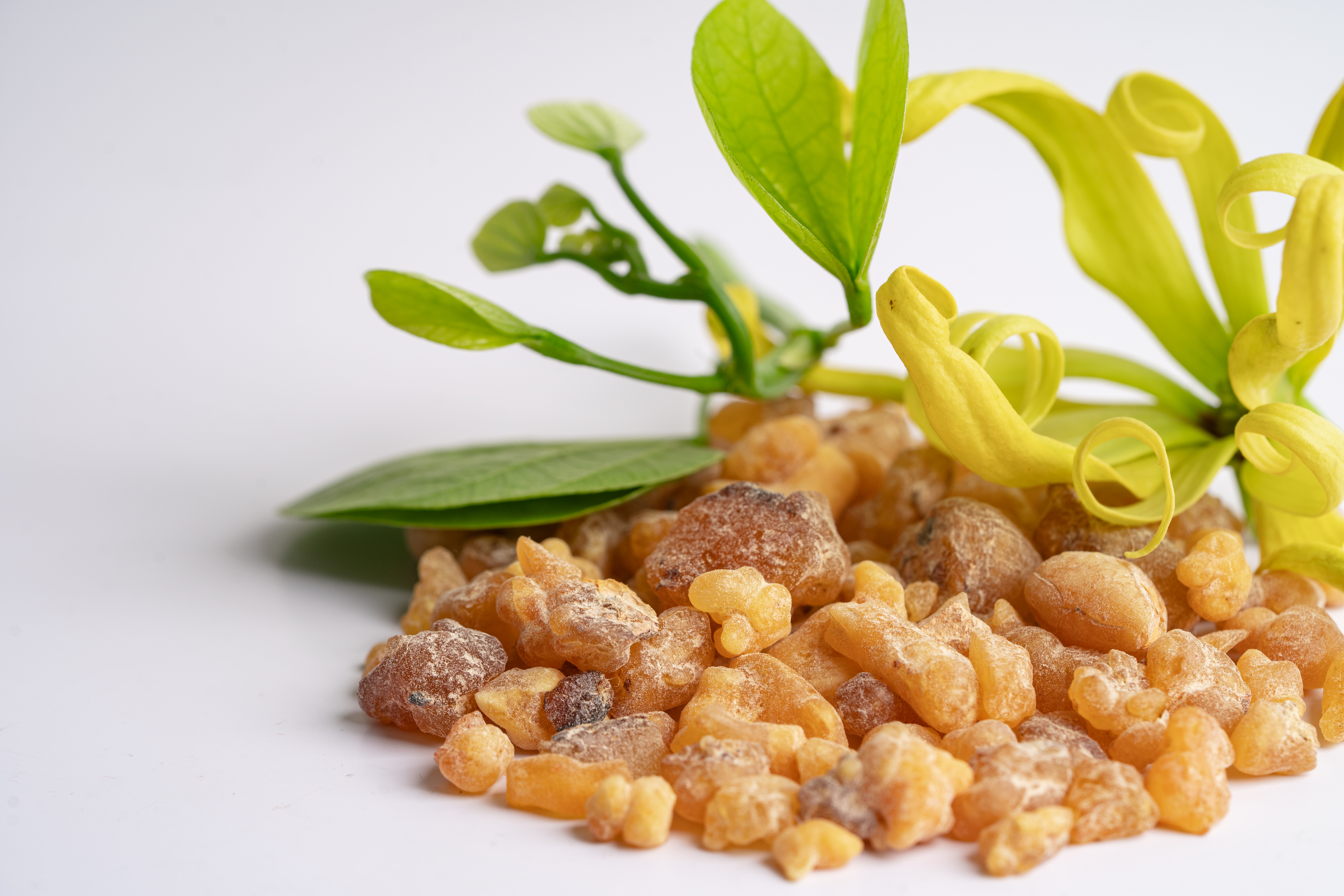
Commiphora wightii (Arn.) Bhandari, commonly known as Guggul, is an important medicinal plant that has been used in traditional Indian medicine for more than 2,000 years. Its oleo-gum-resin, obtained from the stem and branches, has been incorporated into Ayurvedic, Unani and folk medicinal formulations for a range of health conditions. The medicinal properties of Guggul have been attributed to bioactive constituents, particularly guggulsterones, essential oils, terpenoids and steroidal compounds. Its traditional applications and reported pharmacological activities have attracted scientific interest, particularly in relation to lipid metabolism, inflammation, joint health and oxidative stress. However, the strength of clinical evidence varies across these applications, and traditional use should not be equated with established therapeutic efficacy.
Traditional medicinal importance
Ayurveda:
- Guggul has been described in classical Ayurvedic texts, including the Charaka Samhita, Sushruta Samhita and Bhavaprakasha. It has traditionally been regarded as a rejuvenating, anti-inflammatory and lipid-regulating substance. Guggul-containing formulations have been prescribed for Medoroga (obesity), with the aim of managing excess body weight and supporting metabolic function.
- Its use has also been documented in musculoskeletal conditions, including osteoarthritis, rheumatoid arthritis and gout, to alleviate joint pain, stiffness, swelling and inflammation.
- In Ayurvedic practice, Guggul has additionally been incorporated into formulations for skin disorders, including acne, eczema, boils and chronic ulcers. Its traditional use in wound care has been associated with its purported antimicrobial and wound-healing properties.
- Furthermore, Guggul has been used to support cardiovascular health and maintain healthy lipid levels. These traditional applications have contributed to scientific investigations into its potential effects on cholesterol metabolism and cardiovascular risk factors.
Unani and folk medicine
- In Unani medicine and folk healing practices, Guggul has been employed for its traditionally recognised anti-inflammatory, stimulant and expectorant properties. Preparations have been used for joint pain, muscular discomfort, respiratory complaints and digestive disturbances, including indigestion and bloating.
- Its expectorant use has been associated with the loosening and clearance of respiratory mucous in conditions such as cough and bronchitis.
- Guggul resin has also been applied externally to wounds and skin lesions, with antimicrobial activity and wound healing proposed as potential benefits. In some traditional systems, it has been described as a blood purifier, a concept associated with detoxification and improved circulation rather than a defined biomedical outcome.
Modern pharmacological properties
Phytochemical and pharmacological investigations have identified several potential biological activities of Guggul. The principal areas of interest are summarised below:
|
Pharmacological activity |
Reported effects and potential relevance |
|
Hypo-lipidaemic |
Guggulsterones have been investigated for their effects on lipid metabolism and elevated cholesterol and triglyceride levels. |
|
Anti-inflammatory |
Modulation of inflammatory pathways has been explored as a possible mechanism underlying its traditional use in joint and inflammatory disorders. |
|
Antioxidant |
Free-radical-scavenging activity has been reported in experimental studies, suggesting a potential role in limiting oxidative stress. |
|
Anti-obesity |
Effects on lipid metabolism and energy utilisation have been investigated in relation to body-weight management. |
|
Anti-arthritic |
Potential reductions in joint inflammation, pain and stiffness have been examined in experimental and clinical research. |
|
Cardioprotective |
Possible benefits associated with lipid regulation and reduced oxidative stress have been investigated; prevention of cardiovascular events has not been established. |
|
Hepatoprotective |
Experimental findings suggest potential protection against certain forms of chemical and oxidative liver injury. |
|
Antimicrobial and immunomodulatory |
Effects on microbial growth and immune responses are being investigated for possible therapeutic applications. |
|
Anticancer and neuroprotective |
Preliminary research has explored potential effects on cancer-related cellular processes and neuronal injury; clinical relevance remains uncertain. |
Hypo-lipidaemic and cardiovascular effects:
- Guggulsterones have received considerable attention for their potential influence on lipid metabolism.
- Changes in circulating cholesterol and triglyceride levels have been investigated, supporting interest in Guggul as a possible adjunct in lipid management.
- However, clinical findings have not consistently confirmed the benefits suggested by preclinical research. Consequently, Guggul should not be considered a substitute for established lipid-lowering therapies or cardiovascular risk-reduction strategies.
Anti-inflammatory and anti-arthritic effects:
- Anti-inflammatory activity has been attributed to bioactive constituents of Guggul, with modulation of biochemical pathways involved in inflammatory responses proposed as a possible mechanism. These effects have been investigated in relation to arthritis, rheumatism and other chronic inflammatory conditions.
- Potential improvements in pain, stiffness and joint function have also been explored. Nevertheless, the effectiveness of individual Guggul preparations cannot be assumed to be equivalent, as their composition and bioactive constituent concentrations may vary.
Antioxidant and hepatoprotective potential:
- Antioxidant activity has been reported for Guggul constituents, which may help limit oxidative damage under experimental conditions.
- Hepatoprotective effects have also been investigated, particularly in models of chemically induced or oxidative liver injury. Although these findings provide a basis for further research, protection against liver damage in experimental models does not establish efficacy in human liver disease.
Emerging therapeutic applications
Antimicrobial, immunomodulatory, anticancer and neuroprotective effects are additional areas of investigation. These properties may offer directions for future pharmaceutical research, but the evidence remains preliminary for many proposed applications. Further studies are required to identify the active constituents, clarify mechanisms of action, determine effective doses and establish clinical relevance.
Safety and research considerations
The safety of Guggul depends on the preparation, dose, duration of use and individual patient characteristics. Gastrointestinal disturbances and skin reactions have been reported with some guggul-containing products. Potential interactions with prescribed medicines should also be considered, and use during pregnancy or breastfeeding should be avoided unless specifically advised by a qualified healthcare professional.
Conclusion
Commiphora wightii (Guggul) has a long history of use in Ayurveda, Unani medicine and folk healing. Its guggulsterones and other bioactive constituents have been investigated for hypo-lipidaemic, anti-inflammatory, antioxidant, anti-obesity and hepatoprotective effects, alongside emerging antimicrobial, immunomodulatory, anticancer and neuroprotective applications. However, promising experimental findings have not consistently translated into established clinical benefits. Further well-designed human studies are needed to determine its efficacy, safety, optimal dosage and interactions.1,2
References:
- Tailor V, Khanduri A. Commiphora wightii (Guggul): cultivation, medicinal importance and economic potential. Ambika Prasad Research Foundation; 2026. https://www.researchgate.net/publication/411183603_COMMIPHORA_WIGHTII_GUGGUL
- Yamada T, Sugimoto K. Guggulsterone and Its Role in Chronic Diseases. Adv Exp Med Biol. 2016;929:329-361. doi:10.1007/978-3-319-41342-6_15 https://link.springer.com/chapter/10.1007/978-3-319-41342-6_15