
Introduction
Taxonomical and botanical overview
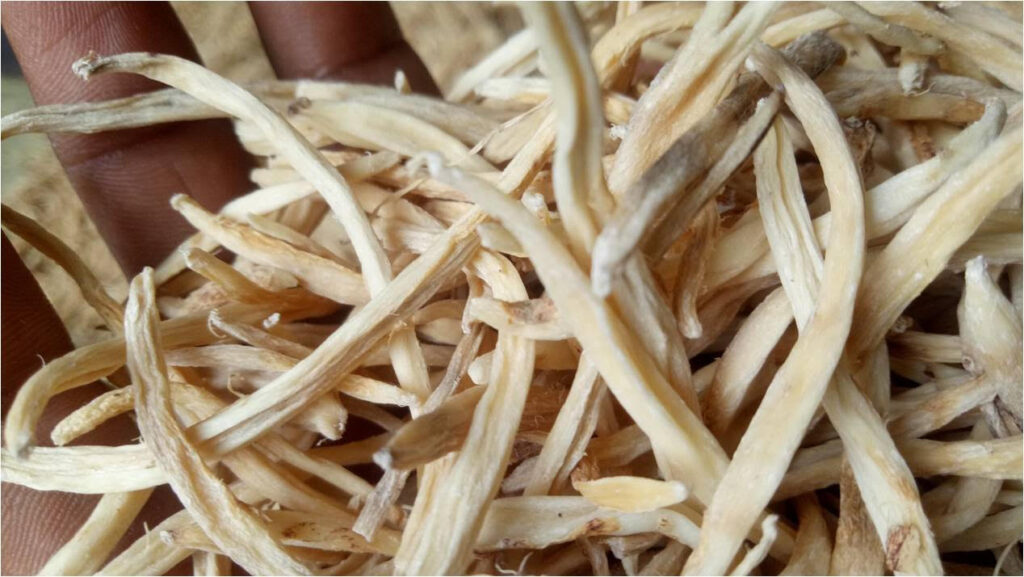
Chlorophytum borivilianum Santapau and Fernandes (family Liliaceae/Asparagaceae) is an endangered medicinal geophyte widely recognized for its therapeutic and nutraceutical importance. Commonly known as “Safed Musli,” the plant derives its medicinal value primarily from its tuberous roots, which are extensively used in traditional medical systems.
Ethnomedicinal significance and traditional use
Safed Musli holds a prominent position in Ayurveda, Unani, Homeopathy, and traditional folk medicine, where it is primarily classified as a rejuvenative (Rasayana) and health-promoting tonic.1 Ethnobotanical surveys across various regions of India, including Rajasthan, Maharashtra, Madhya Pradesh, and Mizoram, report its widespread traditional use for enhancing vitality, physical strength, longevity, and management of male reproductive disorders.
Socioeconomic and cultural relevance
Indigenous communities have historically incorporated Safed Musli into their healthcare practices, with increasing recognition of its socioeconomic importance. This has led to community-based cultivation practices in certain regions, particularly in Maharashtra, where its commercial value has encouraged domestication efforts.
Commercial importance and pharmacological relevance
Global demand and market expansion:
Chlorophytum borivilianum has emerged as a highly valued medicinal plant due to its reputed aphrodisiac, adaptogenic, and immunomodulatory properties. It is widely marketed as a natural alternative to synthetic sexual performance enhancers, contributing to its increasing global demand.
Functional food and nutraceutical applications:
Beyond medicinal use, its tubers are being processed into powders, flakes, and dietary supplements in several countries, including the United States and the United Kingdom, reflecting its growing acceptance as a functional food ingredient.
Industrial utilization:
The plant is a key component in more than 100 herbal formulations across pharmaceutical and nutraceutical industries. However, increasing demand has led to overexploitation from natural habitats, raising concerns regarding sustainability and conservation.
Ethnopharmacological uses2
Historical and traditional relevance:
Chlorophytum borivilianum root tubers have been used in the Indian traditional medical system since the 11th century A.D. as a therapeutic and health-promoting agent. In Ayurveda, it is classified as a sacred medicinal plant and is often referred to as “divya aushadha” due to its rejuvenative significance.
Ayurvedic pharmacological profile:
- According to Ayurvedic texts, Safed Musli exhibits:
- Rasa: Madhura (sweet), Tikta (bitter)
- Guna: Snigdha (unctuous), Guru (heavy), Mridu
- Virya: Sheeta (cooling)
- Vipaka: Madhura (post-digestive sweet effect)
It is categorized under Vajikaran Rasayana, a group of herbs used for reproductive rejuvenation and enhancement of vitality.
Classical and scriptural references
- Mythological and textual evidence:
Its use is described in ancient scriptures such as Srimad Bhagavatam, Kamasutra, Bhavaprakash Nighantu, Rasendra Sara Sangrah, and Raja Nighantu. It is also associated with formulations like Chyawanprash, prepared by the Ashwini Kumaras for rejuvenation purposes.
- Rasayana classification:
In Ayurvedic literature, Safed Musli is included among Rasayana drugs, which are described by Sushruta as agents that promote longevity (Ayushya), strength (Bala), and cognitive enhancement (Medha).
Traditional therapeutic applications
Reproductive and sexual health:
Chlorophytum borivilianum is widely used as an aphrodisiac and in the management of male reproductive disorders such as:
- Erectile dysfunction
- Oligospermia
- Premature ejaculation
It is also regarded as a natural immunomodulator and sexual tonic.
General health and metabolic effects:
The plant is traditionally used for:
- Enhancement of physical strength and endurance
- Management of fatigue and general debility
- Muscle strengthening and recovery from exhaustion
- Immunity enhancement
It is often compared to Panax ginseng and referred to as “Indian Ginseng” due to its adaptogenic-like properties.
Systemic and organ-specific uses
Respiratory and metabolic support:
Safed Musli is used as an energy tonic in respiratory conditions such as asthma and is incorporated into Ayurvedic and Unani formulations for overall vitality enhancement.
Gastrointestinal and systemic effects:
It exhibits traditional carminative, antipyretic, diuretic, and astringent properties and is used as a lactagogue and appetite stimulant.
Regional ethnomedicinal practices
Dietary and cultural usage:
In western India, particularly Gujarat, Safed Musli is consumed regularly with milk as a daily health supplement. It is also used in postpartum nutrition to restore energy and body fluids.
Postpartum and reproductive care:
- Root preparations are used in:
- Lactation enhancement
- Postnatal recovery
- Gynecological disorders (e.g., leucorrhea)
- Nutritional supplementation during pregnancy
Traditional preparations include laddoo formulations consumed for postpartum strength recovery.
Musculoskeletal and anti-inflammatory applications
Joint and bone health: Safed Musli is traditionally used in the management of:
- Arthritis
- Rheumatism
- Bone fractures
- Musculoskeletal pain
It is often administered with milk for enhanced therapeutic effects.
Ethnobotanical and community-based uses
Tribal and indigenous applications:
Various tribal communities, including Meena, Korku, Bharia, and Mizo groups, use Chlorophytum borivilianum for improving immunity, metabolic strength, and overall vitality.
Broader ethnopharmacological relevance:
Ethnobotanical surveys report its use in conditions such as diabetes, diarrhea, dysentery, dysuria, and general metabolic enhancement.
Dermatological and cosmetic uses
Skin-related applications: The root paste mixed with milk or honey is traditionally applied for:
- Skin brightening
- Complexion enhancement
- Anti-aging effects
It is also considered beneficial for oral ulcers and blood purification.
Safety considerations
Adverse effects:
Chlorophytum borivilianum is generally considered safe; however, excessive intake may occasionally cause gastrointestinal discomfort.
Conclusion
A number of ethnomedicinal claims—such as antipyretic, antidiarrheal, antidysenteric, anti-dysuric, anti-obesity, anti-aging, and gynecological benefits—remain scientifically underexplored or unvalidated. Systematic pharmacological evaluation is required to confirm these traditional therapeutic uses. There is increasing scientific interest in correlating traditional claims with pharmacological mechanisms. Advanced studies involving:
- Bioassay-guided isolation of active constituents
- Molecular mechanism elucidation
- Pharmacokinetic and toxicity profiling
are essential to establish evidence-based therapeutic applications and identify potential adverse effects.
To ensure global acceptability of C. borivilianum-based products, implementation of Good Agricultural Practices (GAP), Good Manufacturing Practices (GMP), Good Storage Practices (GSP), and Hazard Analysis and Critical Control Points (HACCP) is necessary for quality assurance, safety, and consistency. Strict enforcement of regulatory frameworks such as the Indian Forest Act (1927) is essential to prevent overexploitation and illegal trade. Sustainable cultivation practices should be promoted to ensure long-term conservation of this endangered species.
References:
- Thakur GS, Bag M, Sanodiya BS, et al. Chlorophytum borivilianum: a white gold for biopharmaceuticals and neutraceuticals. Curr Pharm Biotechnol. 2009;10(7):650-666. doi:10.2174/138920109789542084. https://pubmed.ncbi.nlm.nih.gov/19751181/
- Khanam Z, Singh O, Singh R, Bhat IU. Safed musli (Chlorophytum borivilianum): a review of its botany, ethnopharmacology and phytochemistry. J Ethnopharmacol. 2013;150(2):421-441. doi:10.1016/j.jep.2013.08.064. https://pubmed.ncbi.nlm.nih.gov/24045177/