Introduction
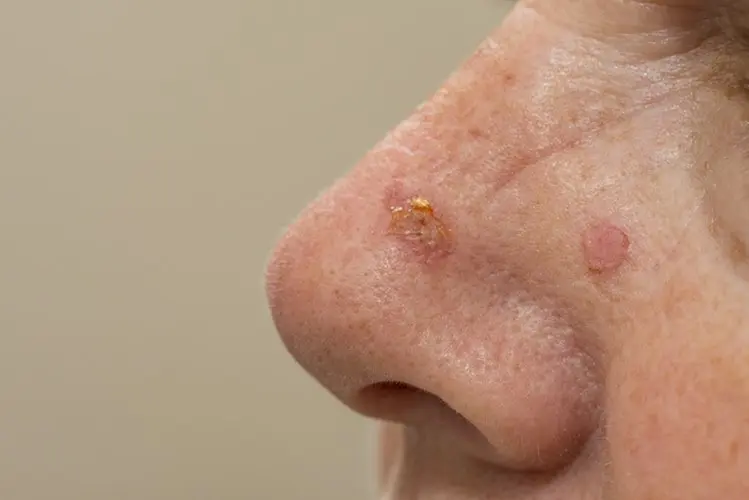
Skin cancer represents one of the most frequently diagnosed malignancies worldwide and includes basal cell carcinoma, squamous cell carcinoma, and melanoma. Skin cancers, being the most prevalent cancers, are identified in Caucasians globally, and as a result of increased exposure to ultraviolet radiation, their incidence is steadily rising. Skin cancer is defined by an imbalance that favors either excessive cell survival and proliferation in the epidermis or insufficient apoptosis [58,59].
From a biomedical perspective, skin carcinogenesis is driven by UV-induced DNA damage, oxidative stress, chronic inflammation, and dysregulation of apoptotic and cell-cycle regulatory pathways. In Ayurveda, cancer-like conditions are broadly correlated with arbuda and granthi, which involve abnormal tissue proliferation (dhatu vriddhi) and impaired cellular regulation due to dosha imbalance.
Pathophysiology of skin cancer: modern and Ayurvedic correlation
Modern mechanisms include:
- UV-induced DNA mutations (p53 pathway disruption)
- Oxidative stress and reactive oxygen species (ROS) generation
- Chronic inflammatory microenvironment
- Dysregulated apoptosis and uncontrolled proliferation
- Tumor microenvironment remodeling
Ayurvedic interpretation includes:
- Tridosha imbalance with Kapha dominance leading to abnormal growth
- Rakta dhatu dushti (blood tissue vitiation)
- Impaired Agni resulting in abnormal cellular metabolism
- Blockage of srotas (microchannels) leading to tissue dysregulation
Phytochemical mechanisms in skin cancer modulation
Phytochemicals from medicinal plants act through multiple anticancer pathways:
- Antioxidant activity reducing UV-induced oxidative stress
- Anti-inflammatory effects via NF-κB and COX-2 inhibition
- Induction of apoptosis in malignant cells
- Cell cycle arrest at G0/G1 or G2/M phases
- Inhibition of angiogenesis (VEGF pathway suppression)
- Modulation of immune surveillance mechanisms
- DNA repair enhancement and photoprotective effects
These multimodal actions make phytotherapy relevant for both chemoprevention and adjunctive cancer management.
Panax ginseng and chemopreventive effects in skin cancer
Panax ginseng is a well-known adaptogenic herb with bioactive ginsenosides exhibiting anticancer potential.
In experimental studies, topical application of red ginseng extracts has been shown to suppress chemically induced skin cancers in mice.
The proposed mechanisms include:
- Inhibition of tumor cell proliferation
- Enhancement of apoptosis in abnormal keratinocytes
- Modulation of oxidative stress pathways
- Immune system activation against tumor cells
These findings suggest a chemopreventive role of ginseng in UV- or chemically induced skin carcinogenesis.1
Rosmarinus officinalis (rosemary) and skin cancer inhibition
Rosmarinus officinalis contains potent polyphenols such as rosmarinic acid, carnosic acid, and ursolic acid, known for antioxidant and anti-inflammatory activity.2
Extracts from rosemary are reported to possess strong antioxidant properties. The effects of a leaf methanol extract on mouse skin cancers were evaluated, and it was observed that topical application significantly reduced both the formation and growth of skin tumors in animals exposed to chemical carcinogens.
Importantly, the study indicated that multiple phytochemical constituents contributed synergistically to this anticancer effect, and the protective action was not solely dependent on antioxidant activity, suggesting involvement of additional molecular pathways such as anti-proliferative and anti-inflammatory mechanisms.
Ayurvedic perspective on skin cancer management
In Ayurvedic oncology concepts, management is aimed at restoring systemic balance and preventing abnormal tissue proliferation. Therapeutic strategies include:
- Shodhana therapy (detoxification procedures) to remove metabolic toxins (ama)
- Shamana therapy using anti-proliferative and immunomodulatory herbs
- Rasayana therapy to enhance cellular regeneration and immunity
- External applications to control local lesion progression
Common Ayurvedic herbs used in skin-related disorders include Curcuma longa, Azadirachta indica, Tinospora cordifolia, and Rubia cordifolia, which exhibit anti-inflammatory, antioxidant, and cytoprotective properties.
Therapeutic role of phytochemical and Ayurvedic interventions in skin cancer
Phytochemical and Ayurvedic therapies contribute to skin cancer management through:
- Reduction of oxidative DNA damage
- Suppression of abnormal keratinocyte proliferation
- Induction of programmed cell death in malignant cells
- Modulation of tumor-promoting inflammatory pathways
- Enhancement of immune-mediated tumor surveillance
- Protection against UV-induced photodamage
- Support of tissue repair and cellular homeostasis
These actions highlight their potential role primarily in chemoprevention and adjunctive supportive therapy rather than standalone cancer treatment.
Advantages of phytochemical-based Ayurvedic approaches
- Multitarget anticancer activity (antioxidant, anti-inflammatory, immunomodulatory)
- Potential for chemoprevention in high-risk populations
- Lower toxicity profile compared to conventional cytotoxic therapies
- Synergistic action of multiple phytoconstituents
- Support for immune system regulation and host defense
- Applicability in long-term preventive dermatological care
- Integration potential with modern oncological strategies
Conclusion
Phytochemical and Ayurvedic perspectives in skin cancer therapy provide a biologically plausible and mechanistically diverse approach to cancer prevention and adjunctive management. Evidence from experimental studies on Panax ginseng and Rosmarinus officinalis demonstrates significant antitumor potential through antioxidant, anti-proliferative, and immunomodulatory mechanisms.
While these findings are promising, current evidence supports their role primarily in chemoprevention and supportive care. Further well-designed clinical trials and molecular studies are required to establish standardized, evidence-based integration into dermatological oncology.
References:
-
- Agrawal R, Jurel P, Deshmukh R, et al. Emerging Trends in the Treatment of Skin Disorders by Herbal Drugs: Traditional and Nanotechnological Approach. Pharmaceutics. 2024;16(7):869. Published 2024 Jun 28. doi:10.3390/pharmaceutics16070869. https://pmc.ncbi.nlm.nih.gov/articles/PMC11279890/
- Allegra A, Tonacci A, Pioggia G, Musolino C, Gangemi S. Anticancer Activity of Rosmarinus officinalis L.: Mechanisms of Action and Therapeutic Potentials. Nutrients. 2020;12(6):1739. Published 2020 Jun 10. doi:10.3390/nu12061739. https://pmc.ncbi.nlm.nih.gov/articles/PMC7352773/