
Introduction
Children experience frequent infections due to the ongoing maturation of the immune system and increased exposure to environmental pathogens. Recurrent respiratory tract infections, recurrent fever episodes, gastrointestinal infections, and allergic disorders are among the most common pediatric concerns. Although most infections are self-limiting, repeated episodes may indicate reduced immune competence and can adversely affect physical and cognitive development.
Ayurveda recognizes childhood (Bala Avastha) as a period of developing immunity, where maintenance of Ojas and proper nourishment of body tissues are essential. Guduchi has been extensively described in classical texts as a Rasayana capable of enhancing resistance against disease while promoting longevity and vitality.1
Ayurvedic perspective
Guduchi is described as:
- Tikta and Kashaya Rasa (bitter and astringent taste)
- Laghu and Snigdha Guna (light and unctuous qualities)
- Ushna Virya (hot potency)
- Madhura Vipaka
- Rasayana (rejuvenative)
- Jwaraghna (antipyretic)
- Tridoshahara (balances all three doshas)
- Balya (strength-promoting)
These properties make Guduchi particularly useful in recurrent infections, fever, and immune weakness.
Phytochemical constituents
Major bioactive compounds include:
- Tinosporaside
- Cordifolioside A
- Magnoflorine
- Berberine
- Alkaloids
- Diterpenoid lactones
- Polysaccharides
These constituents contribute to its immunomodulatory and antimicrobial activities.
Mechanisms supporting pediatric immunity
Immunomodulatory activity:
Guduchi enhances both innate and adaptive immune responses. Experimental studies demonstrate stimulation of macrophage activity, improved phagocytosis, and enhanced production of immune-regulatory cytokines, thereby strengthening host defense mechanisms.
Enhancement of disease resistance (Vyadhikshamatva):
Classical Ayurvedic literature attributes disease-preventive effects to Guduchi through the promotion of Ojas. Modern studies support this concept by demonstrating improved immune responsiveness and reduced susceptibility to infections.
Antimicrobial properties:
Guduchi exhibits antibacterial, antiviral, and antifungal activities against various pathogens commonly implicated in pediatric infections. These effects may help reduce the frequency and severity of recurrent illnesses.
Anti-inflammatory effects:
Excessive inflammation contributes to tissue damage during infections. Guduchi modulates inflammatory mediators such as TNF-α, IL-1β, and IL-6, helping control inflammation while preserving immune function.
Antioxidant protection:
Oxidative stress can impair immune cell function. Guduchi’s antioxidant compounds protect immune cells from free radical damage and support normal immune regulation.
Clinical applications in children
Guduchi may be beneficial in:
- Recurrent respiratory tract infections
- Recurrent fever syndromes
- Allergic respiratory disorders
- Recurrent gastrointestinal infections
- Post-infectious weakness
- General immune support
In Ayurvedic pediatric practice, Guduchi is often administered as Guduchi Satva, decoctions, syrups, or as a component of polyherbal formulations.
Safety considerations
Guduchi is generally considered safe when used in age-appropriate doses under professional supervision. Available studies report a favorable safety profile with minimal adverse effects.
Conclusion
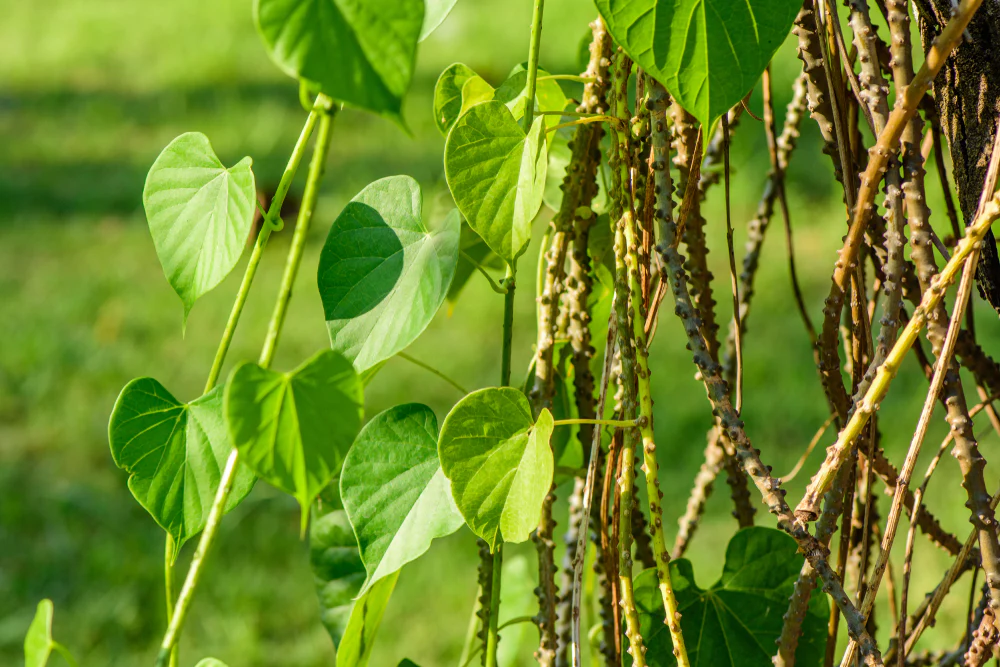
Guduchi (Tinospora cordifolia) is a valuable Ayurvedic Rasayana with significant potential in enhancing pediatric immunity and reducing recurrent infections.2 Its immunomodulatory, antimicrobial, anti-inflammatory, and antioxidant properties support both traditional Ayurvedic concepts of Vyadhikshamatva and modern understanding of immune regulation. Growing scientific evidence supports its role as a safe and effective complementary approach for promoting immune resilience and overall health in children.
Reference:
- Sharma U, Bala M, Kumar N, Singh B, Munshi RK, Bhalerao S. Immunomodulatory active compounds from Tinospora cordifolia. J Ethnopharmacol. 2012 Jun 14;141(3):918-26. doi: 10.1016/j.jep.2012.03.027. Epub 2012 Mar 26. PMID: 22472109. https://pubmed.ncbi.nlm.nih.gov/22472109/
- Saha S, Ghosh S. Tinospora cordifolia: One plant, many roles. Anc Sci Life. 2012;31(4):151-159. doi:10.4103/0257-7941.107344 https://pmc.ncbi.nlm.nih.gov/articles/PMC3644751/