
Introduction
Acne vulgaris as a prevalent inflammatory skin disorder
Acne vulgaris is one of the most common dermatological conditions worldwide, with peak incidence during adolescence and early adulthood, and is well recognized for its substantial psychosocial burden and reduction in quality of life.
Multifactorial pathogenesis of acne
Acne is a chronic inflammatory disorder of the pilosebaceous unit characterized by a complex interplay of:
- Increased sebum production
- Abnormal follicular keratinization
- Colonization by Cutibacterium acnes
- Activation of innate and adaptive immune responses
Although genetic predisposition, hormonal influences, environmental exposure, and lifestyle factors contribute to disease expression, increasing evidence highlights the significant role of diet and nutritional status in modulating acne severity and progression.
Metabolic and endocrine regulation in acne pathophysiology
Recent research implicates systemic metabolic signaling pathways in acne pathogenesis, particularly:
- Insulin and insulin-like growth factor-1 (IGF-1) signaling
- Nutrient-sensing pathways such as mechanistic target of rapamycin complex 1 (mTORC1)
These pathways promote sebocyte lipogenesis, keratinocyte proliferation, and inflammatory cytokine activation, thereby providing a mechanistic basis for diet-mediated modulation of acne lesions.
Dietary modulation of acne: current evidence
Macronutrient and dietary pattern interventions:
Clinical and observational studies have explored multiple dietary strategies in acne management, including:
- Low glycemic load diets
- Dairy restriction interventions
- Omega-3 fatty acid supplementation
- Plant-based dietary patterns
These approaches are associated with reduced inflammatory activity, improved insulin sensitivity, and modulation of sebaceous gland activity.
Role of micronutrients and bioactive compounds
Micronutrients and phytochemicals such as:
- Zinc
- Vitamin A derivatives
- Polyphenols
- Probiotics
have demonstrated potential anti-inflammatory, antimicrobial, and barrier-supportive effects relevant to acne pathophysiology.
Gut–skin axis and systemic inflammation
Emerging evidence supports a bidirectional relationship between gut microbiota composition and skin health. Dietary interventions influencing gut microbial diversity may indirectly modulate cutaneous immunity, sebum composition, and inflammatory signaling pathways involved in acne.
Almonds as a functional food in acne-related metabolic modulation
Nutritional composition of almonds:
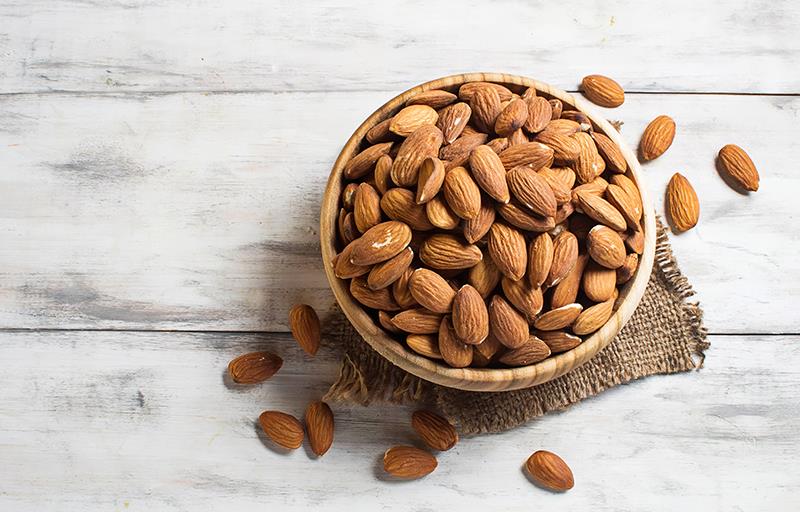
Almonds are nutrient-dense tree nuts containing:
- Monounsaturated fatty acids
- Vitamin E (tocopherols)
- Dietary fiber
- Magnesium and zinc
- Polyphenolic antioxidants
These constituents collectively exhibit antioxidant, anti-inflammatory, and metabolic regulatory properties.
Mechanistic relevance to acne pathophysiology:
The biochemical profile of almonds may influence acne-related pathways through:
- Reduction of oxidative stress in sebaceous glands
- Modulation of systemic inflammation
- Improvement of postprandial glycemic response
- Regulation of lipid metabolism and sebum production
- Support of epidermal barrier integrity
Metabolic and cardiometabolic benefits:
Almond consumption has been associated with:
- Improved insulin sensitivity
- Reduced postprandial glucose excursions
- Favorable lipid profile modulation
These systemic effects may indirectly attenuate IGF-1–mediated sebaceous gland stimulation and inflammatory acne pathways.
Discussion
Clinical significance of almond supplementation in acne vulgaris:
Clinical study provides novel evidence that daily almond consumption is associated with clinically meaningful improvements in acne lesion burden, lesion morphology, systemic inflammatory and metabolic parameters, skin microbial diversity, and acne-related quality of life in young adults. These findings are consistent with and extend the growing body of literature linking dietary patterns, metabolic homeostasis, and acne pathophysiology.
The observed reduction in non-inflammatory lesions, in particular, suggests that almonds may exert a stronger influence on early acne pathogenesis, including microcomedone formation and sebaceous follicular changes, rather than solely modulating established inflammatory lesions. This pattern supports a role for dietary modulation in upstream acne mechanisms.
Almonds are rich in monounsaturated fatty acids, vitamin E, zinc, dietary fiber, and polyphenolic compounds, all of which exhibit antioxidant and anti-inflammatory properties. These nutrients collectively reduce oxidative stress, modulate inflammatory cytokine production, and influence sebocyte activity, thereby contributing to improved cutaneous outcomes.
Impact on lesion burden and inflammatory pathways:
A ~22% reduction in total acne lesion count following almond supplementation represents a modest but clinically relevant improvement, particularly in individuals seeking non-pharmacological or adjunctive strategies for acne management.
The concurrent reduction in inflammatory mediators, including TNF-α, further supports the anti-inflammatory potential of almonds. These findings align with established evidence that acne is driven by inflammatory cascades involving cytokine activation, oxidative stress, and immune dysregulation within the pilosebaceous unit.
Improvements in metabolic markers, including fasting glucose and lipid profile, reinforce the role of the insulin/IGF-1 axis in acne pathogenesis. Given that hyperinsulinemia and elevated IGF-1 promote sebaceous lipogenesis and keratinocyte proliferation, the observed metabolic benefits provide a plausible mechanistic link between almond intake and acne improvement.
Modulation of metabolic pathways relevant to acne:
Acne is increasingly recognized as a metabolically influenced inflammatory skin disorder, where insulin resistance, IGF-1 signaling, and mTORC1 activation play central roles. Almond consumption has been shown to attenuate postprandial glycemic excursions and improve lipid metabolism, thereby indirectly influencing sebaceous gland activity and inflammatory signaling pathways.
These metabolic improvements observed in the intervention group suggest that almonds may act through systemic metabolic recalibration, reducing upstream drivers of acne pathogenesis rather than merely addressing cutaneous manifestations.
Effects on skin microbiome and microbial diversity:
Clinical study further explored the role of almonds in modulating skin microbiota, an emerging frontier in acne research. Alpha diversity indices, including Chao1 and Shannon scores, demonstrated an overall increase in microbial richness and diversity in the almond group.
Cutibacterium acnes remains a central microbial determinant in acne pathophysiology. While it is a commensal organism, dysbiosis characterized by dominance of pro-inflammatory strains contributes to follicular inflammation, keratinocyte activation, and biofilm formation. Reduced microbial diversity is associated with impaired skin barrier function and increased inflammatory susceptibility.
Although between-group differences in microbiome diversity did not reach statistical significance, the observed positive trend suggests a biologically relevant shift potentially mediated through systemic metabolic and immune modulation.
Gut–skin axis and mechanistic plausibility:
Dietary components in almonds, including fiber, unsaturated fats, and polyphenols, are known to influence gut microbiota composition, increasing beneficial taxa such as Bifidobacterium and Lactobacillus and promoting short-chain fatty acid production.
These gut-derived metabolites and microbial shifts may influence systemic inflammation, immune regulation, and sebaceous gland activity through the gut–skin axis. While direct skin microbiome modulation remains less well characterized, these findings support a systemic pathway through which dietary almonds may indirectly improve cutaneous microbial ecology and acne severity.
Psychosocial outcomes and quality of life:
Acne significantly impacts psychological well-being, including anxiety, self-esteem, and social functioning. Almond supplementation was associated with improvements in acne-related quality of life and anxiety scores, likely reflecting both clinical improvement and enhanced perception of skin health.
Interestingly, sleep quality (PSQI scores) showed a worsening trend in the intervention group. This paradoxical finding may reflect multifactorial influences such as dietary timing, lifestyle variation, circadian rhythm disruption, or behavioral confounders, rather than a direct effect of almonds. Existing literature on diet–sleep interactions remains inconsistent, highlighting the need for targeted chrononutrition studies.
Integrated interpretation of findings:
Collectively, the simultaneous improvements in lesion count, lesion morphology, metabolic markers, microbial diversity, and psychosocial outcomes suggest that almonds may exert multi-system effects relevant to acne pathophysiology.
The greater reduction in non-inflammatory lesions indicates a stronger influence on early comedogenesis, potentially mediated through improvements in insulin sensitivity, oxidative stress reduction, and modulation of sebaceous lipid production.
These findings support the hypothesis that dietary interventions can act as adjunctive strategies in acne management by targeting both systemic and cutaneous mechanisms.
Conclusion
It has been demonstrated that almonds as a nutrient-dense dietary intervention have potential benefits in acne vulgaris through modulation of metabolic, inflammatory, and microbial pathways. The findings support a growing paradigm shift toward food-based, systems-level approaches in acne management, emphasizing the role of diet–microbiome–skin interactions in dermatological health.1
References:
- Moitra P, Madan J, Shah K, et al. Almond Supplementation Improves Acne Lesions and Skin Microbial Diversity in Adults with Mild to Moderate Acne Vulgaris. Nutrients. 2026;18(4):625. Published 2026 Feb 13. doi:10.3390/nu18040625. https://pmc.ncbi.nlm.nih.gov/articles/PMC12943583/