
Introduction
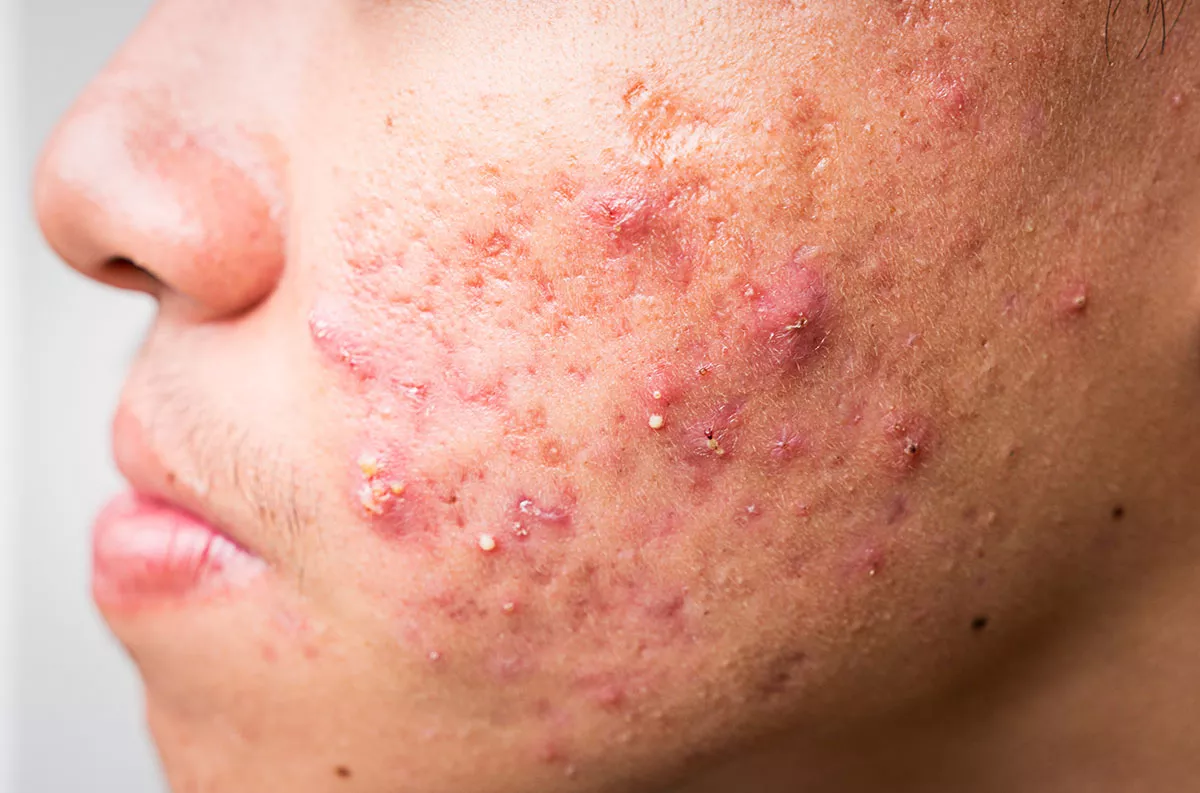
Acne vulgaris is a chronic inflammatory disorder of the pilosebaceous unit characterized by comedones, papules, pustules, nodules, and potential scarring. It arises from a multifactorial pathogenesis involving sebaceous gland hyperactivity, follicular hyperkeratinization, microbial colonization—particularly Cutibacterium acnes—and dysregulated inflammatory immune responses.
Conventional therapies such as topical retinoids, benzoyl peroxide, and systemic antibiotics are effective but may be associated with irritation, resistance development, and limited long-term tolerability. This has led to growing interest in phytochemicals with multitarget pharmacological activity.
Curcumin, the principal bioactive polyphenol derived from Curcuma longa (turmeric), has gained attention due to its potent anti-inflammatory, antimicrobial, antioxidant, and wound-healing properties.1 Evidence from experimental and clinical studies suggests its potential role as an adjunctive therapeutic agent in acne vulgaris.
Phytochemical profile of curcumin
Curcumin is a diarylheptanoid compound with multiple biological activities. Key constituents of turmeric relevant to dermatological activity include:
- Curcumin I (diferuloylmethane)
- Curcumin II and III (demethoxycurcumin and bisdemethoxycurcumin)
- Volatile oils (turmerone, atlantone, zingiberene)
- Polyphenols
- Flavonoid-like compounds
These molecules collectively contribute to curcumin’s therapeutic effects on inflammatory skin disorders.
Pathophysiology of acne vulgaris
Sebaceous gland hyperactivity:
Androgen-driven sebum overproduction creates an oily microenvironment that promotes bacterial growth.
Follicular hyperkeratinization:
Abnormal keratinocyte proliferation leads to follicular blockage and comedone formation.
Microbial colonization:
Cutibacterium acnes proliferates within blocked follicles and produces lipases and inflammatory mediators.
Inflammatory cascade
Immune activation leads to increased production of:
- Interleukin-1β (IL-1β)
- Tumor necrosis factor-alpha (TNF-α)
- Interleukin-8 (IL-8)
- Reactive oxygen species (ROS)
This inflammatory cascade is responsible for lesion progression and tissue damage.
Mechanisms of action of curcumin in acne vulgaris
Anti-inflammatory activity:
Curcumin is a potent modulator of inflammatory pathways involved in acne pathogenesis.
- Key mechanisms include:
- Inhibition of NF-κB signaling pathway
- Downregulation of pro-inflammatory cytokines (TNF-α, IL-1β, IL-6)
- Suppression of COX-2 and LOX enzymes
- Reduction of neutrophil infiltration in affected skin
These effects lead to decreased erythema, swelling, and lesion severity.
Antimicrobial activity:
Curcumin exhibits broad-spectrum antimicrobial effects against acne-associated pathogens.
- Mechanisms include:
- Disruption of bacterial cell membrane integrity
- Inhibition of Cutibacterium acnes proliferation
- Suppression of bacterial biofilm formation
- Interference with microbial enzymatic activity
This helps reduce follicular bacterial load and infection-driven inflammation.
Antioxidant effects:
Oxidative stress plays a critical role in acne lesion formation and post-inflammatory damage.
- Curcumin acts by:
- Scavenging reactive oxygen species (ROS)
- Reducing lipid peroxidation in sebaceous follicles
- Enhancing endogenous antioxidant enzymes (SOD, catalase, glutathione peroxidase)
- Protecting keratinocytes from oxidative injury
Sebum regulation and keratinocyte modulation
Emerging evidence suggests curcumin may indirectly influence acne through:
- Regulation of keratinocyte proliferation
- Reduction of follicular hyperkeratinization
- Modulation of sebaceous gland inflammatory signaling
- Improvement of skin barrier homeostasis
Wound healing and scar prevention
Curcumin supports post-acne recovery by:
- Enhancing fibroblast migration
- Promoting collagen synthesis and remodeling
- Accelerating epithelial regeneration
- Reducing post-inflammatory hyperpigmentation
Therapeutic role of curcumin in acne vulgaris
Mild to moderate acne:
- Curcumin may help:
- Reduce comedonal lesions
- Decrease inflammatory papules and pustules
- Improve overall skin clarity
- Minimize lesion progression2
Inflammatory acne
- In moderate inflammatory acne, curcumin contributes to:
- Reduction in erythema and swelling
- Faster lesion resolution
- Suppression of bacterial-driven inflammation
- Improved treatment tolerability when combined with standard therapies
Adjunct to conventional therapy
Curcumin is particularly useful as an adjunct to:
- Topical retinoids
- Benzoyl peroxide
- Antibiotic therapy
- Herbal dermatological formulations
It may enhance efficacy while reducing irritation and oxidative damage.
Advantages of curcumin in acne management
- Multitarget pharmacological activity (anti-inflammatory, antimicrobial, antioxidant)
- Natural and plant-derived compound with high safety profile
- Reduces antibiotic dependency and resistance risk
- Improves skin healing and reduces scarring potential
- Compatible with topical and systemic acne therapies
- Cost-effective and widely available phytochemical agent
- Supports long-term skin health and barrier function
Conclusion
Curcumin, the principal bioactive compound of Curcuma longa, demonstrates strong scientific potential in the management of acne vulgaris through its anti-inflammatory, antimicrobial, antioxidant, and skin-regenerative properties. By targeting multiple pathogenic mechanisms of acne, curcumin offers a promising natural therapeutic strategy, particularly as an adjunct to conventional treatments.
Although current evidence supports its clinical relevance, further standardized and well-controlled studies are necessary to optimize formulation, dosage, and delivery systems for effective integration into modern dermatological practice.
References:
- El-Saadony MT, Saad AM, Mohammed DM, et al. Curcumin, an active component of turmeric: biological activities, nutritional aspects, immunological, bioavailability, and human health benefits - a comprehensive review. Front Immunol. 2025;16:1603018. Published 2025 Aug 21. doi:10.3389/fimmu.2025.1603018. https://pmc.ncbi.nlm.nih.gov/articles/PMC12408333/
- Junaid S, Naz Khan K, Zameer F, et al. Evaluating the efficacy of curcumin plus serratiopeptidase formulation in inflammatory acne: a quasi-experimental study. Drugs Context. 2025;14:2025-4-2. Published 2025 Jul 9. doi:10.7573/dic.2025-4-2. https://pmc.ncbi.nlm.nih.gov/articles/PMC12259233/