Introduction Acute on chronic pancreatitis is a complex clinical condition characterized by acute inflammatory exacerbations superimposed on long-standing pancreatic damage. It is associated with abdominal pain, impaired digestion, malabsorption, enzyme insufficiency, and systemic inflammatory response. Conventional management focuses on pain control, pancreatic rest, enzyme supplementation, and supportive care. However, recurrent episodes and progressive loss of pancreatic function remain therapeutic challenges. Ayurveda offers a complementary perspective through the management of Agni, Dosha imbalance, and Ama accumulation. In this context, Madhutailik Basti and Shamana Chikitsa provide a structured therapeutic approach for restoring digestive and systemic balance. Ayurvedic correlation of pancreatitis Although pancreatitis is not directly described in classical Ayurvedic texts, it can be correlated with disorders involving Pachaka Pitta, Samana Vata, and Agni dushti. Acute inflammatory episodes resemble Pittaja conditions, while chronicity reflects Vata aggravation with progressive tissue depletion (Dhatukshaya). Impaired digestion leads to Ama formation, which obstructs Srotas (microchannels), contributing to pain, inflammation, and malabsorption. The pancreas, functionally linked with digestive fire, is affected when Agni becomes unstable, resulting in enzymatic imbalance and systemic metabolic dysfunction. Madhutailik Basti: Concept and therapeutic role Madhutailik Basti is a classical Anuvasana-type medicated enema formulation containing honey (Madhu), sesame oil (Tila Taila), and herbal decoctions depending on patient condition. It is considered highly effective in Vata-predominant disorders and is particularly useful in chronic inflammatory and degenerative conditions. In the context of acute on chronic pancreatitis, Madhutailik Basti plays a key role in stabilizing Vata dosha, which governs pain perception, intestinal motility, and neural regulation of digestion. Its unctuous and nourishing properties help reduce dryness, inflammation, and tissue degeneration. From a physiological standpoint, rectal administration allows systemic absorption of lipid-soluble components, which may exert anti-inflammatory and gut-regulatory effects. It also supports autonomic balance, reducing visceral hypersensitivity and abdominal pain. Shamana Chikitsa: Palliative management Shamana Chikitsa refers to internal therapeutic measures aimed at pacifying aggravated doshas without extensive detoxification. In pancreatitis, it focuses on reducing Pitta and Vata imbalance, improving digestion, and minimizing inflammation. Commonly used Ayurvedic interventions include: Guduchi (Tinospora cordifolia): Anti-inflammatory and immunomodulatory properties Kutki (Picrorhiza kurroa): Hepatoprotective and Pitta-pacifying effects Shunthi (Zingiber officinale): Enhances digestion and reduces Ama Amalaki (Emblica officinalis): Antioxidant and regenerative properties These herbs help reduce oxidative stress, support pancreatic tissue recovery, and improve digestive enzyme balance. Dietary regulation (Pathya) is a crucial component of Shamana Chikitsa. Light, low-fat, and easily digestible foods are recommended, while heavy, spicy, and fried foods are avoided to prevent aggravation of pancreatic inflammation. Mechanisms of action The combined effect of Madhutailik Basti and Shamana Chikitsa includes: Regulation of Vata-Pitta balance Reduction of systemic inflammation and Ama Improvement in digestive function (Agni deepana) Restoration of gut motility and absorption Neuro-visceral pain modulation Modern interpretations suggest possible roles in modulation of inflammatory cytokines, oxidative stress pathways, and gut–brain axis regulation. Clinical relevance This integrative approach may be particularly useful in managing chronic abdominal pain, preventing recurrent flare-ups, and improving quality of life in patients with chronic pancreatitis. It also supports long-term digestive stability and metabolic balance when used alongside conventional therapy. Conclusion Madhutailik Basti combined with Shamana Chikitsa offers a comprehensive Ayurvedic strategy for managing acute on chronic pancreatitis. By addressing Vata-Pitta imbalance, improving Agni, and reducing Ama, this approach supports symptomatic relief and systemic recovery. Integration with modern medical care may enhance therapeutic outcomes and provide a holistic framework for chronic pancreatic disorders.1 References: Gamne R, Wajpeyi SM, Nara V, Mandal S. Role of Madhutailik Basti and Shamana Chikitsa in the management of acute on chronic pancreatitis: a case report. J Clin Diagn Res. 2024;18(5). https://www.jcdr.net/articles/PDF/19360/68122_CE[Ra1]_F(SS)_QC(KK_RDW_IS)_PF1(VD_OM)_PFA(OM)_PB(VD_KM)_PN(OM).pdf


MD(Ayu) PhD | Associate Professor Government Ayurvedic College and Hospital, Guwahati, Ass...
View Profile
MD (Ay), Ph.D. | Principal (i/c), College of Ayurveda, HOD, Dept. of Kayachikitsa North Ea...
View Profile
BAMS, MD (Ayu), PhD | Prof. & HOD, Department of Samhita and Siddhanta, IA Ayurvedic Medic...
View Profile
MD (Ayurveda), Kayachikitsa Gold Medalist | Founder & Chief Consultant, Pure Ayurvedic Pan...
View Profile
19th Nov 2026 | 5:00 PM
Register Now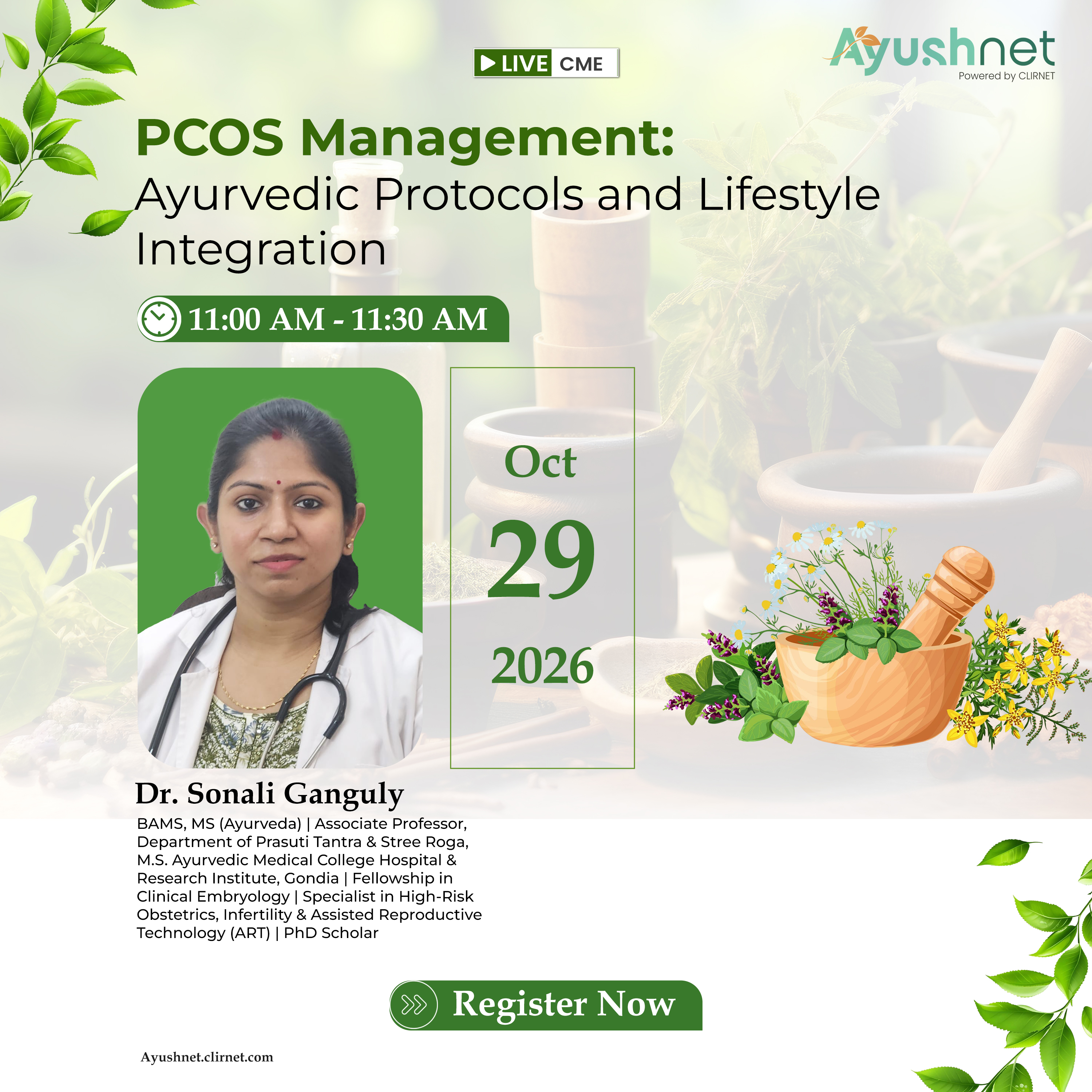
29th Oct 2026 | 11:00 AM
Register Now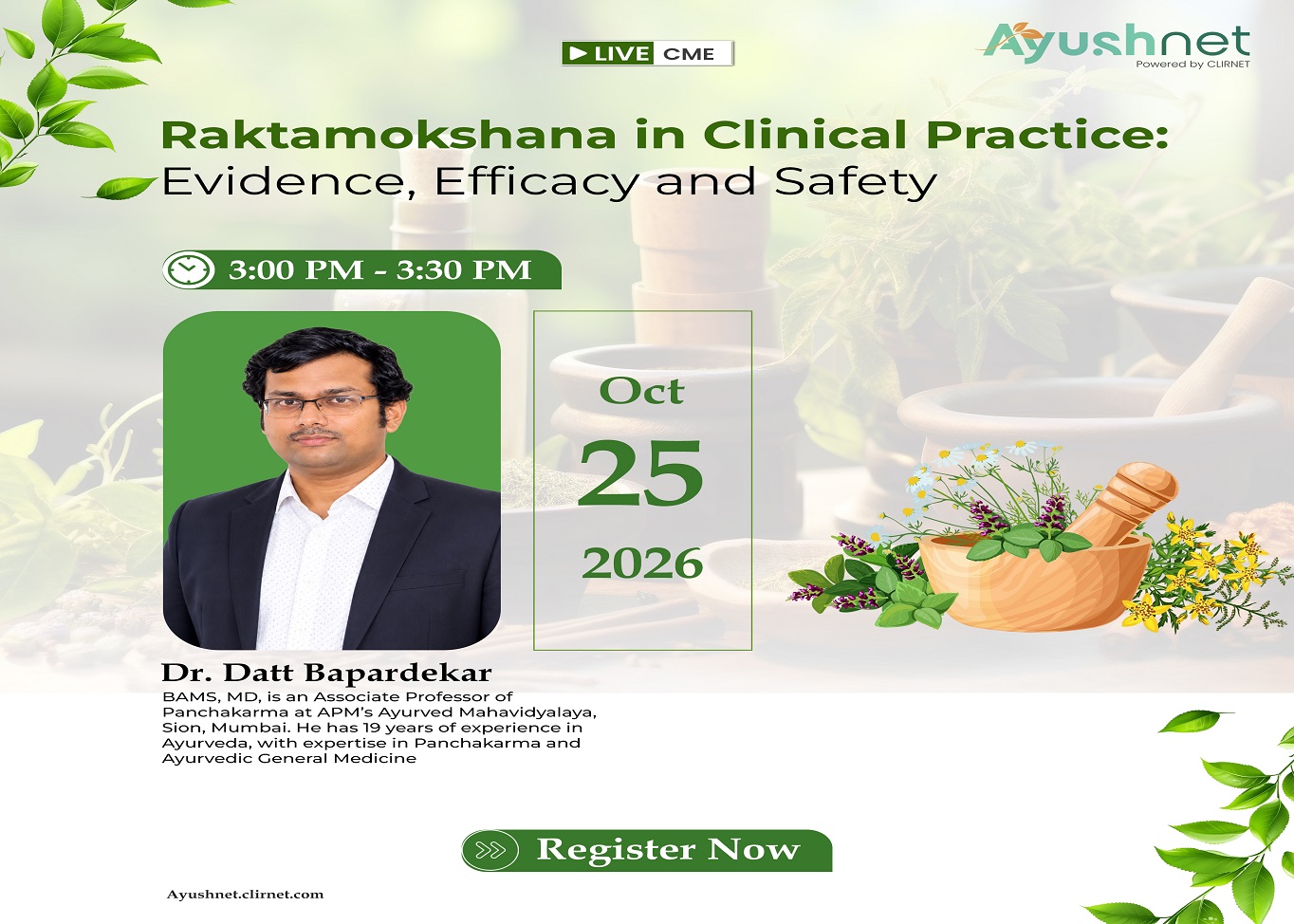
25th Oct 2026 | 3:00 PM
Register Now
24th Oct 2026 | 5:00 PM
Register Now.jpg)
24th Oct 2026 | 7:00 PM
Register Now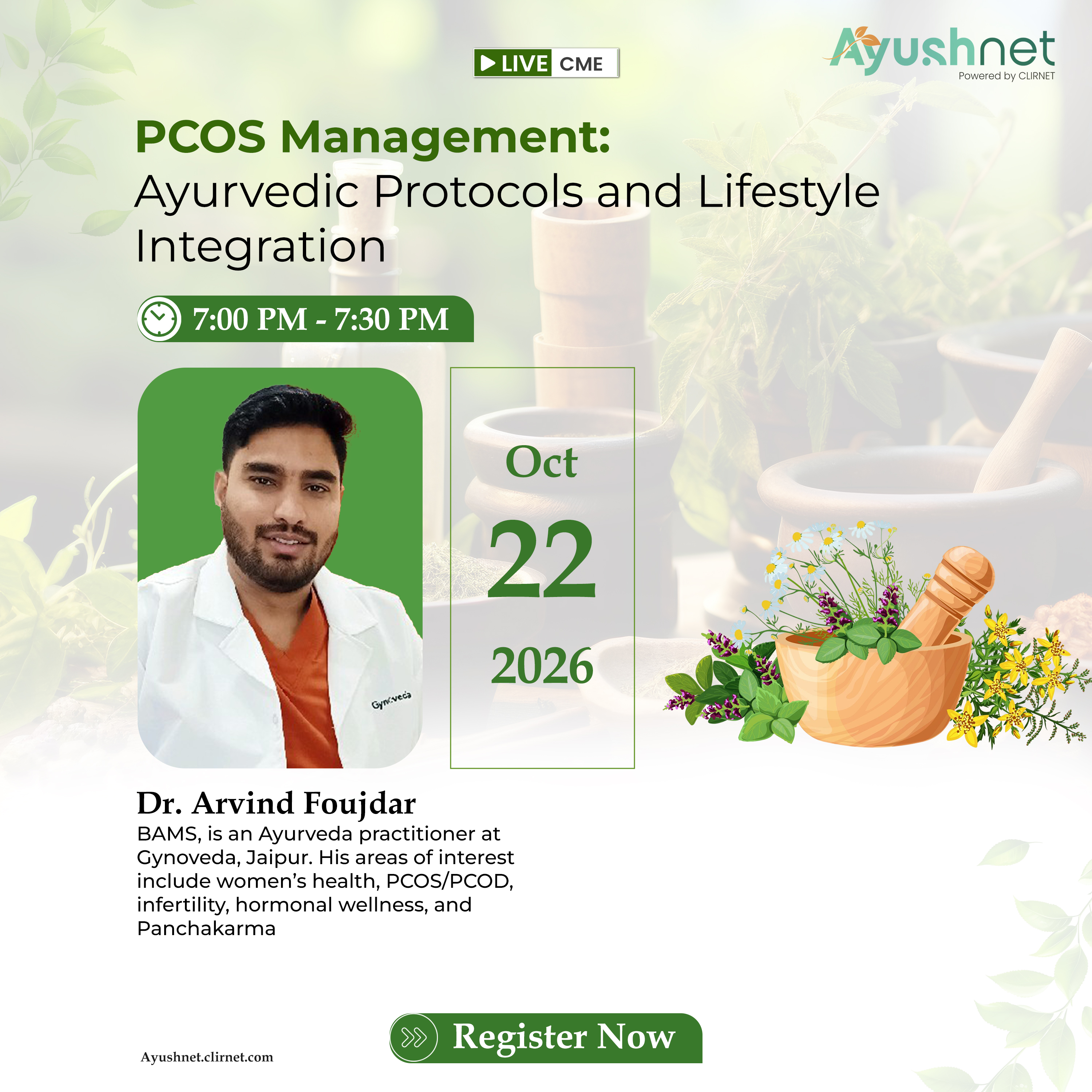
22nd Oct 2026 | 7:00 PM
Register Now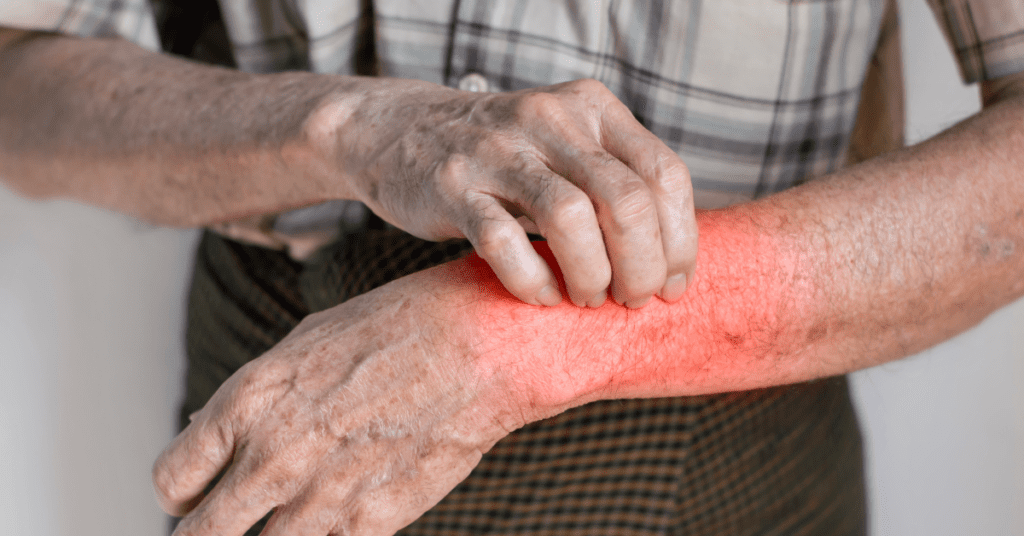
20th Oct 2026 | 5:00 PM
Register Now.jpg)
17th Oct 2026 | 5:30 PM
Register Now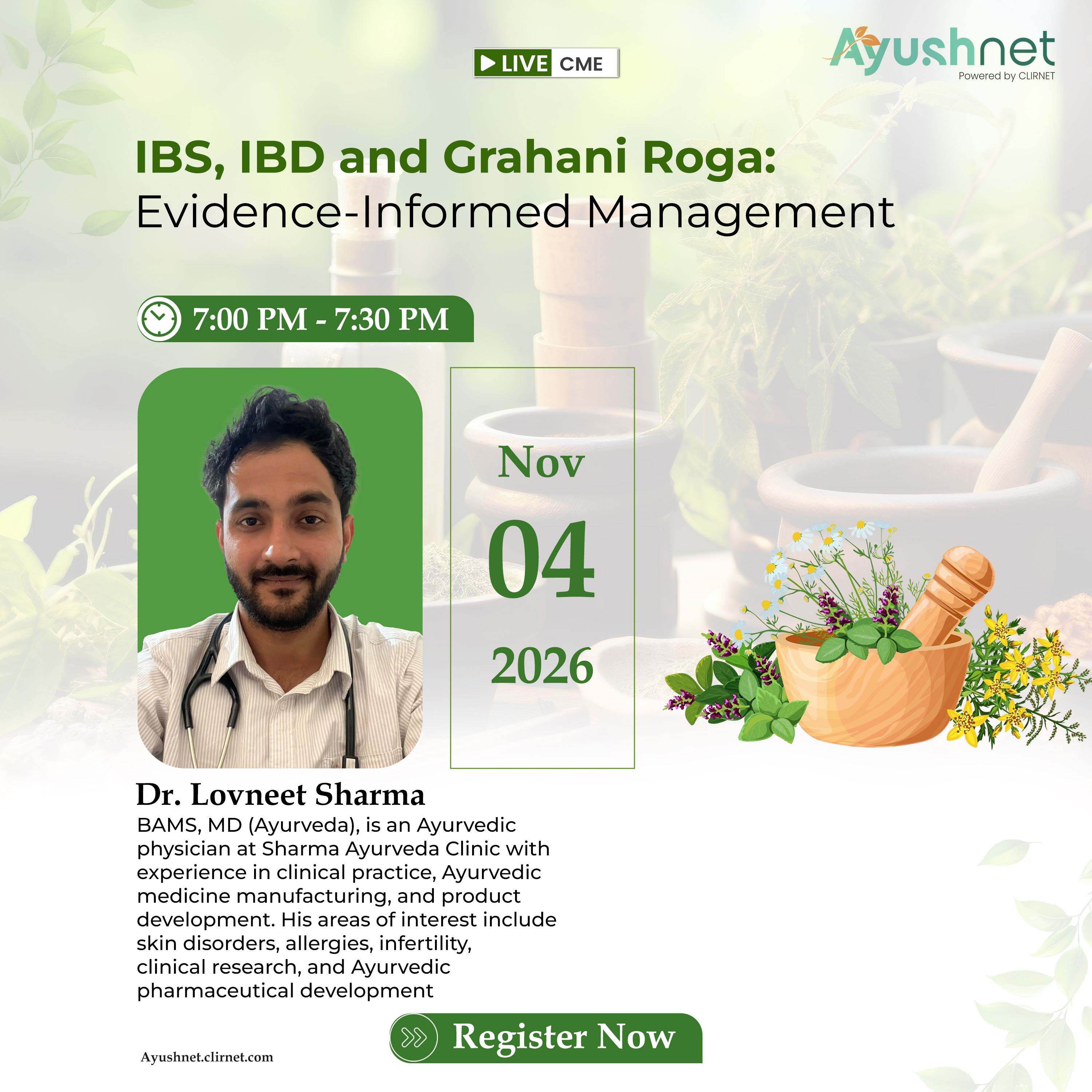
4th Nov 2026 | 7:00 PM
Register Now Video
Video
 Video
Video
 Video
Video
 Video
Video
 Video
Video
 Video
Video
 Video
Video
 Video
Video
 Article
Allergic rhinitis: A growing global and Indian burden Allergic rhinitis is one of the most prevalent allergic disorders...
Read more → Article
Irritable bowel syndrome: Clinical features and disease burden Irritable bowel syndrome (IBS) is a common functional ga...
Read more → Article
Polycystic Ovary Syndrome (PCOS) and endometriosis are among the most common gynecological disorders affecting women of...
Read more → Article
Women's reproductive health encompasses menstrual function, fertility, pregnancy, postpartum recovery, and menopausa...
Read more → Article
Adolescence is a critical transitional phase characterized by rapid physical growth, hormonal maturation, cognitive deve...
Read more → Article
Swarna Bhasma (calcined gold preparation) is one of the most revered formulations in Ayurveda, extensively described und...
Read more → Article
Dravyaguna Vijnana is a fundamental branch of Ayurveda that deals with the pharmacological and therapeutic properties of...
Read more → Article
Marma therapy is an Ayurvedic technique that involves stimulation of vital points (marma sthanas) considered junctions o...
Read more → Article
Marma therapy is a classical Ayurvedic intervention based on stimulation of vital anatomical points (marma sthanas) desc...
Read more →A thriving community where Ayurvedic professionals connect, collaborate, and advance the clinical practice and evolving science of Ayurveda.