
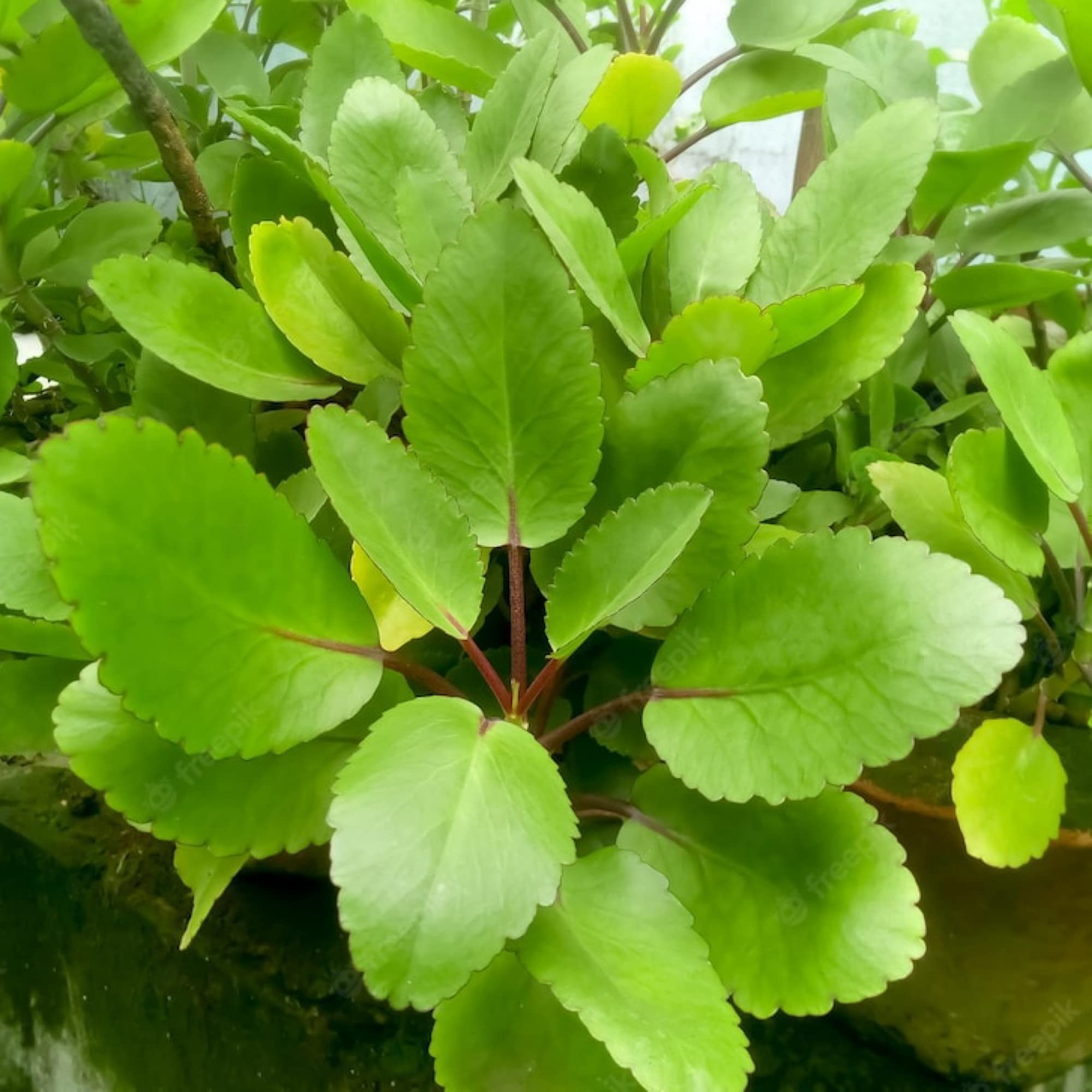
Introduction
Bryophyllum pinnatum (commonly referred to as Patharchur) is a medicinal plant traditionally associated with urinary tract health and stone-related disorders. Its relevance in kidney stone management is linked with its role in supporting urinary system function and addressing processes involved in Ashmari (urolithiasis), a condition characterized by stone formation within the urinary tract.
Pathophysiological relevance in kidney stones (Ashmari)
Kidney stone disease involves crystallization and aggregation of stone-forming constituents within the urinary tract, leading to obstruction, pain, and urinary dysfunction. In Ayurvedic correlation, Ashmari is associated with derangement of Vata and Kapha dosha, contributing to obstruction and retention of calculogenic materials in urinary pathways.
Therapeutic relevance of Bryophyllum pinnatum in Ashmari
Bryophyllum pinnatum is traditionally used in urinary disorders where stone formation and obstruction are present. Its role is associated with supporting urinary clearance and facilitating physiological conditions favorable for urinary tract balance.
Key therapeutic roles include:
- Urinary system support: Contributes to functional regulation of urinary tract processes
- Stone-related symptom support: Used in traditional contexts for urinary discomfort associated with calculi
- Obstruction management support: Aids in maintaining urinary flow dynamics in Ashmari conditions. 1
Clinical application in kidney stone management
Clinical use of Bryophyllum pinnatum leaf extract is described in supportive management approaches for kidney stones. It is incorporated in herbal preparations aimed at urinary tract regulation and symptom relief in urolithiasis conditions.
Core application aspects include:
- Use of leaf extract in kidney stone supportive care protocols
- Inclusion in herbal formulations targeting urinary tract disorders
- Supportive role in urinary discomfort and stone-related symptom management
Pharmacological and mechanistic basis
Pharmacological evaluations of Bryophyllum pinnatum indicate anti-urolithiatic, diuretic, and anti-inflammatory activities. These effects are associated with modulation of crystal formation processes, enhancement of urinary output, and reduction of inflammatory responses within urinary tract tissues. Such multi-target actions contribute to its relevance in kidney stone management frameworks.
Mechanistic perspective in urolithiasis
Kidney stone formation involves supersaturation, nucleation, and aggregation of crystals in the urinary tract. Bryophyllum pinnatum is associated with supportive modulation of these processes through urinary system regulation, improved urine flow, and reduction of stone-forming tendencies, contributing to improved urinary tract function.
Conclusion
Bryophyllum pinnatum demonstrates significant therapeutic relevance in kidney stone management through its traditional application in Ashmari and its pharmacological anti-urolithiatic, diuretic, and anti-inflammatory activities. Its role supports urinary tract function, obstruction relief, and systemic regulation in urolithiasis conditions. 2
References:
- Ranaweera S, Weerasinghe S, Tarannum F, Walters KB. Inhibition and dissolution of calcium oxalate crystals and kidney stones by the extract of Kalanchoe pinnata. Journal of Medicinal Plants Research. 2023;17(6):201-217. doi:10.5897/JMPR2023.7296. https://academicjournals.org/journal/JMPR/article-full-text-pdf/C3B193D70777
- Choudhary S, Bhoir V, Bhoir R, Bhoir C. Bryophyllum pinnatum leaf extract in treatment of kidney stones. International Journal of Pharmaceutical Sciences. 2024;2(1):598-600. doi:10.5281/zenodo.10563390. https://www.ijpsjournal.com/article/Bryophyllum-Pinnatum-Leaf-Extract-In-Treatment-Of-Kidney-Stones