
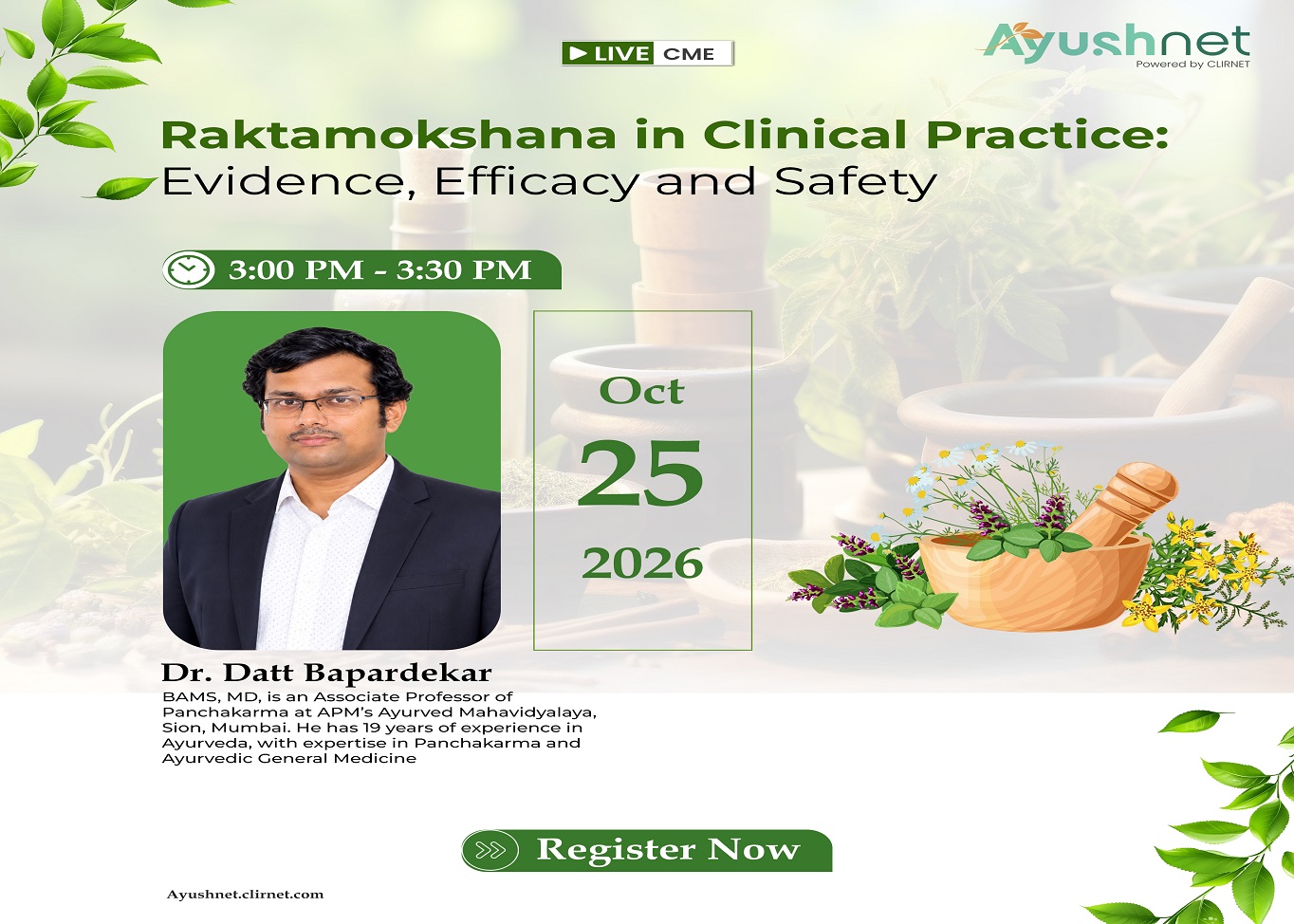
Raktamokshana is a traditional Ayurvedic procedure involving controlled bloodletting and is described as one of the therapeutic approaches within Shodhana Chikitsa. In clinical practice, its use requires careful consideration of the proposed indication, patient selection, procedural technique, and potential risks. Understanding its traditional rationale alongside available clinical evidence is important for evaluating its efficacy and appropriate role in contemporary healthcare. Safety considerations include bleeding, infection, anemia, vasovagal reactions, and complications associated with improper technique or inadequate sterilization. Appropriate screening, trained practitioners, informed consent, and monitoring are essential whenever the procedure is considered. Critical appraisal of clinical studies can help distinguish established benefits from uncertain claims and support responsible, evidence-informed integration of traditional practices.